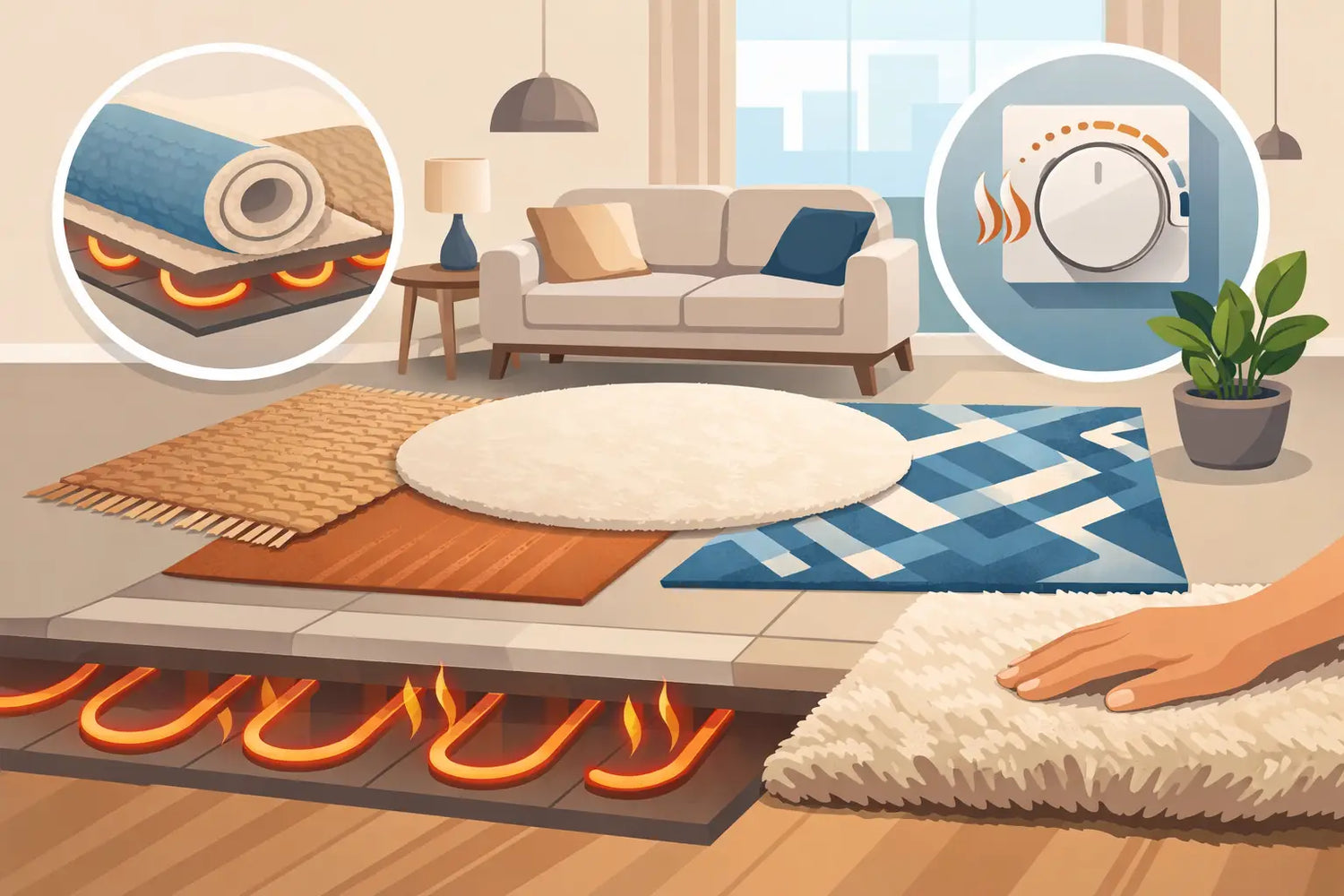
Those with underfloor heating know the dilemma: you want to feel that pleasant warmth but also bring the coziness of a beautiful carpet into your home. The best carpets for underfloor heating do exactly that. They create atmosphere, dampen sound, and soften a room without unnecessarily blocking the heat.
However, not every carpet is a good match. A carpet that is too thick or densely woven can cause your floor to heat less efficiently. The result is less comfort and sometimes even higher energy consumption. That’s why it’s worth considering not only color or style but also material, pile height, and construction.
What makes a carpet suitable for underfloor heating?
A good carpet for underfloor heating allows heat to pass through sufficiently. That sounds simple, but in practice, it depends on a few important properties. Especially the total thermal resistance plays a major role. The lower that resistance, the easier the heat from your floor reaches the room through the carpet.
In plain language, this usually means that a low-pile carpet works better than a high-pile one. A thinner carpet with a flexible structure blocks less heat and still feels comfortable. Especially in living rooms and bedrooms, this is often the best balance between practical use and cozy appearance.
The back of the carpet also matters. Some backings are thick, heavy, or highly insulating. That can be good for soundproofing but less ideal if you want to maximize heat transfer. A lighter and more flexible backing is often a safer choice.
Best carpets for underfloor heating by material
The material not only determines the look and feel underfoot but also how well a carpet works with underfloor heating.
Wool: warm and natural, but not always the lightest choice
Wool carpets have a luxurious appearance and naturally feel comfortable. They fit beautifully in interiors where softness and character are important. At the same time, wool is somewhat more insulating than some synthetic materials. That doesn’t mean it’s excluded for underfloor heating, but thickness becomes especially important.
A finely woven wool carpet with a low pile can work well. A heavy, thick handmade model with a full structure is less suitable if you want maximum heat output. So it really depends on the combination of material and construction.
Polypropylene and polyester: practical and often a smart choice
Synthetic carpets are particularly interesting for many families. Polypropylene and polyester are popular because they are low-maintenance, soft to the touch, and often work well with underfloor heating. Especially low-pile models are a strong choice for heavily used spaces like the living or dining room.
Additionally, these materials are often attractively priced. If you’re looking for a stylish carpet that looks good, is easy to clean, and fits smoothly into daily family life, this is usually a good option.
Cotton and washable carpets: light and convenient
In spaces where convenience is key, cotton or washable carpets are often winners. They are generally lighter and thinner, allowing heat to pass through better. Especially in children’s rooms, kitchens, or compact living spaces, this is a practical solution.
They may not always have the rich, full look of a thick salon rug, but they score high on ease of use. And for many households, that makes all the difference.
Choose low-pile rather than high-pile
Those looking for the best carpets for underfloor heating almost always end up with low-pile models. That’s no coincidence. A low pile lets heat pass more easily and is usually easier to keep clean. Crumbs, dust, and hair are less likely to get trapped, which is especially handy in homes with children or pets.
High-pile carpets naturally feel extra soft and luxurious. They invite you to walk barefoot and immediately create a cozy effect. But that full structure also acts as more insulation. That’s not necessarily a problem in a bedroom where atmosphere is the priority, but in a large living area with high heating demand, it can be less ideal.
If you still want that soft feeling, choose a carpet that looks comfortable but isn’t overly thick. This way, you keep the cozy appearance without too much heat loss.
Which rooms call for which choice?
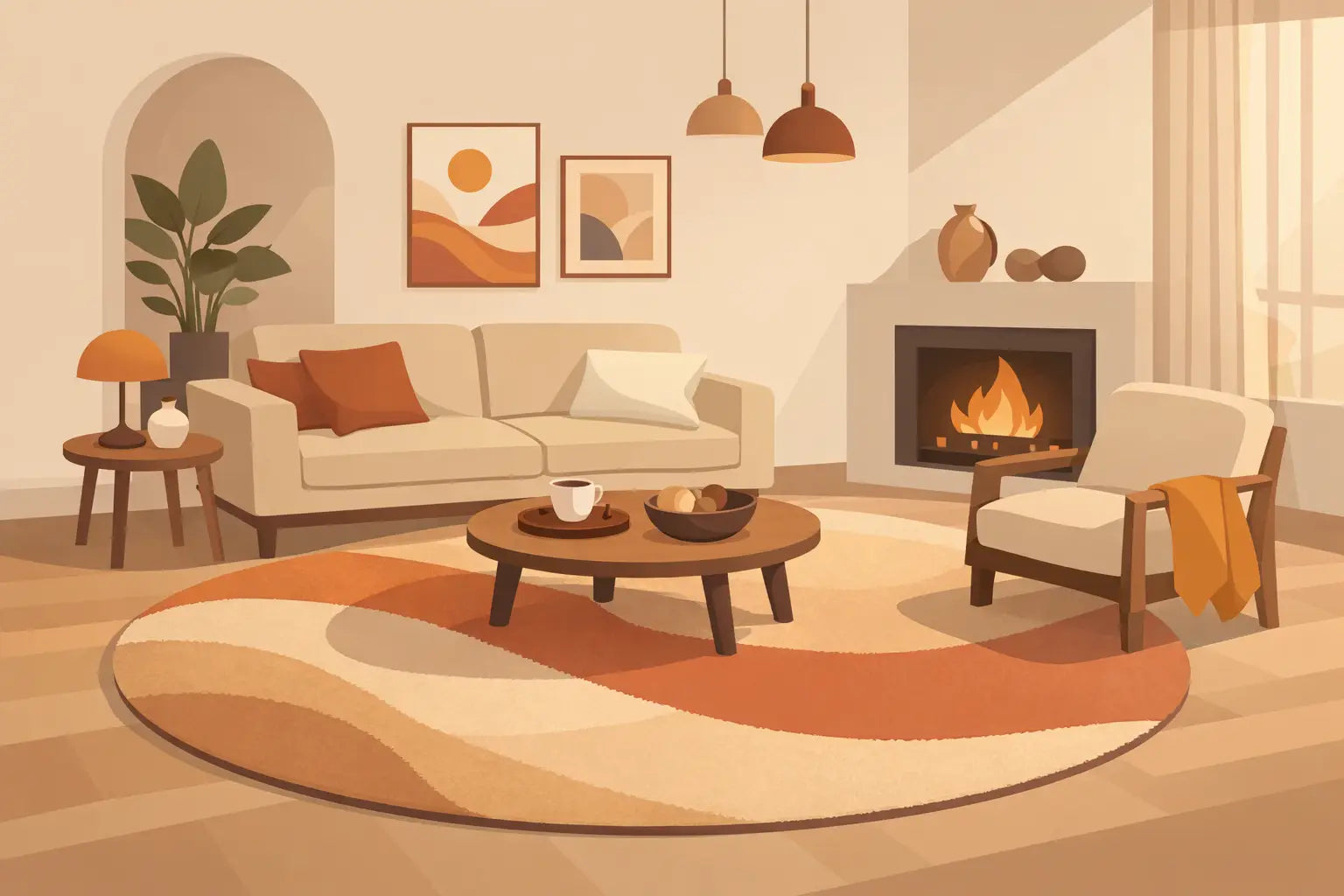
Not every room in the house has the same requirements. In the living room, you usually want a carpet that combines warmth, appearance, and daily comfort. A low-pile modern carpet or a finely woven classic model is often a great solution. It frames the seating area, feels pleasant, and lets the underfloor heating do its job.
In the dining room, practical thinking is even more important. Chairs need to slide easily, and the carpet must resist stains. Flat-woven or low-pile carpets clearly have the advantage here. They look neat and stay tidy more easily.
In the bedroom, it can feel softer and warmer. You can play a bit more with texture as long as the carpet isn’t too heavy or thick. A soft synthetic model with limited pile height often provides just the right balance.
For the children’s room, many families best choose a washable and low-maintenance carpet. This is not only handy for accidents but also pleasant in combination with underfloor heating. Children like to play on the floor, and a comfortable, warm, and practical surface is worth its weight in gold.
Pay attention to total thickness, not just appearance
A carpet can look slim yet still have a solid, insulating base. That’s why it’s smart to look beyond the photo or general product name. The total thickness and density of the carpet often say more about suitability for underfloor heating than the design alone.
An additional underlay can also have an impact. In some cases, it improves comfort or prevents slipping, but it also increases thermal resistance. If your carpet already has an anti-slip backing, an extra layer is often unnecessary. This is not only more practical but also better for heat transfer.
Style and comfort don’t have to exclude each other
Some people think a suitable carpet for underfloor heating must automatically be thin, flat, and lacking in atmosphere. Fortunately, that’s no longer the case. Today, there are many carpets that are stylish, soft, and technically suitable for modern homes with underfloor heating.
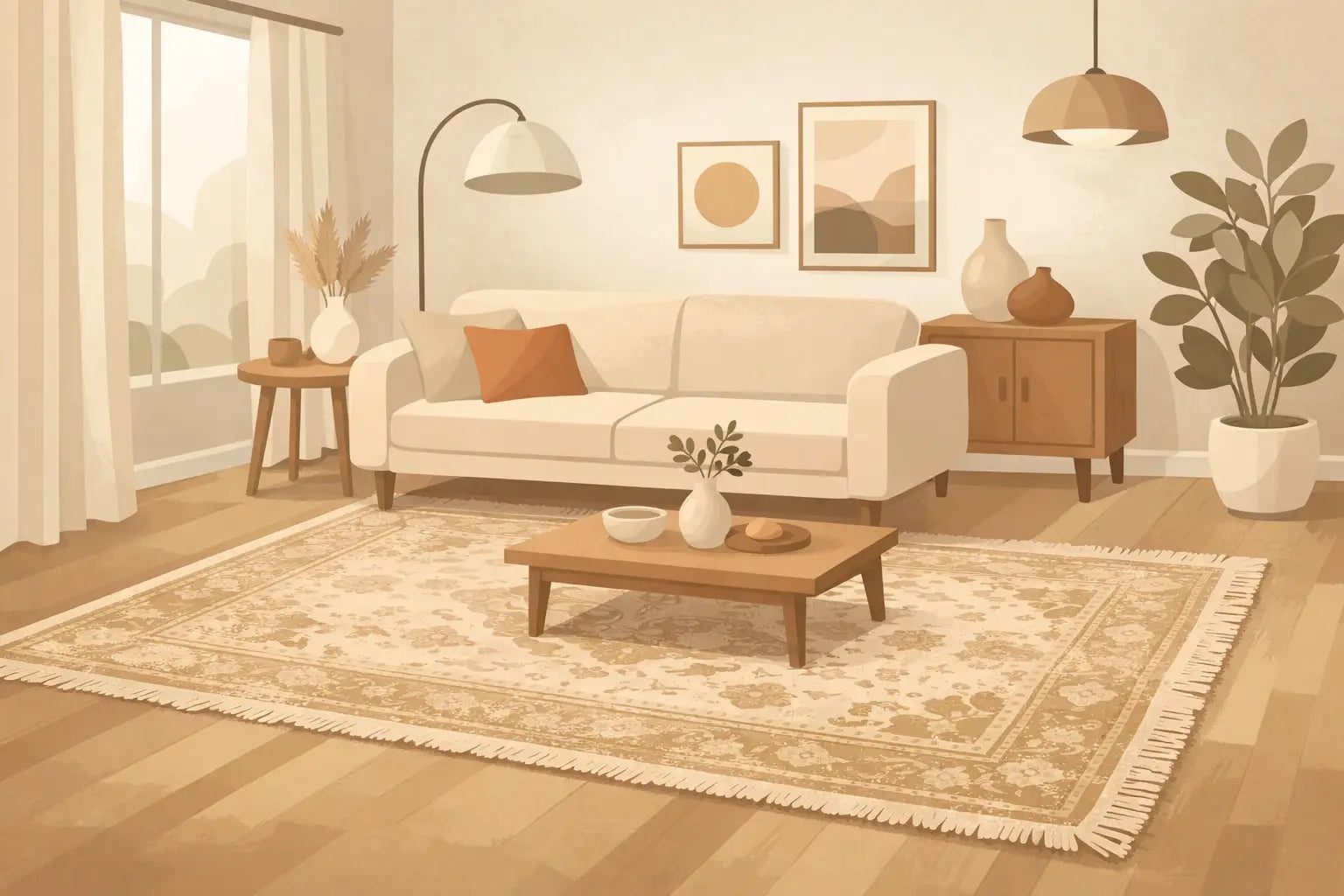
A modern low-pile carpet in neutral tones brings calm to a sleek interior. A classic pattern can add warmth and character to a family home. Kilim-like structures or subtle patterns also work beautifully if you want a carpet that is present without feeling too heavy.
At Omid Carpets, we notice that customers are often surprised by how much choice there actually is. So you don’t have to choose between atmosphere and functionality. With the right model, you get both.
Common mistakes with carpets on underfloor heating
The most common mistake is buying purely based on feel. A carpet that seems extra thick and soft in the store or online looks attractive but may be less suitable on a heated floor. Especially if comfort is the only criterion, the practical side is sometimes forgotten.
A second mistake is not considering maintenance. On underfloor heating, dust can dry faster and behave differently on the surface. Then a carpet that is easy to vacuum and clean is often a much better choice in the long run.
Finally, many people underestimate the importance of the right size. A carpet that is too small lacks visual impact, while one that is too large and heavy can make the space feel bulky and block more heat than necessary. A well-thought-out size makes a difference not only aesthetically but also functionally.
How to make the right choice for your home
Always start with your space and lifestyle. If you live with children, it’s best to choose a low-pile, low-maintenance carpet that can handle wear and tear. If you mainly want to create a stylish, warm seating area, the appearance can weigh a bit more, as long as the structure isn’t too heavy.
Then consider the material, pile height, and backing of the carpet. Does it feel flexible? Is it more finely woven than dense? Is it easy to maintain? These are often better questions than just: does the color match the sofa?
A well-chosen carpet doesn’t make underfloor heating unnecessary or less noticeable. It actually enhances living comfort. You step more softly, your interior looks warmer, and the space gains more personality. That’s exactly the power of a carpet that is not only beautiful but also smartly chosen.
So if you’re looking for extra warmth in your home, you don’t have to choose between technology and coziness. The most beautiful interior not only feels good but also works well in daily life.

Leave a comment
This site is protected by hCaptcha and the hCaptcha Privacy Policy and Terms of Service apply.