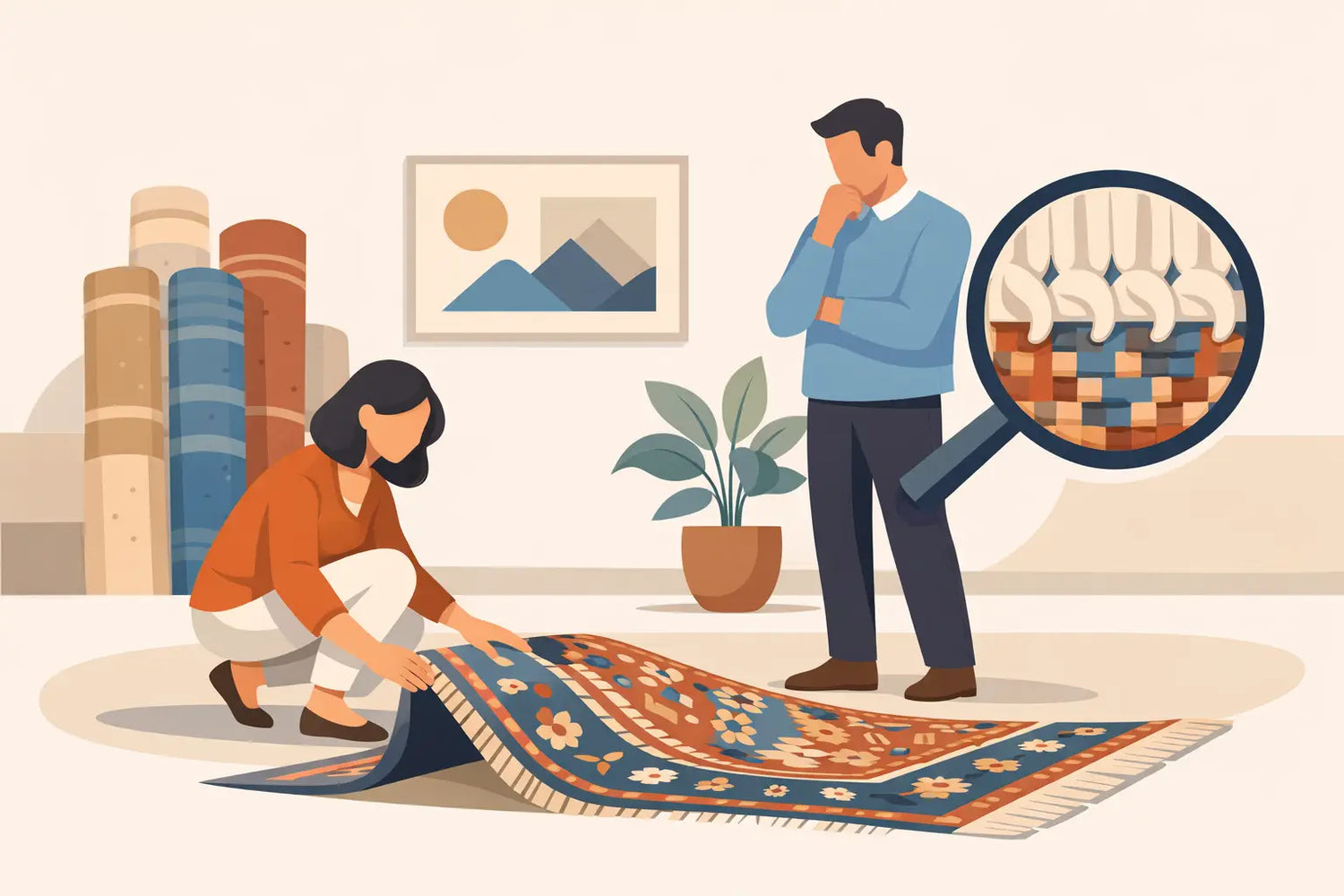
A hand-knotted carpet feels different as soon as you see it. Not only because of its appearance but also because of the calm and depth it brings to a room. Those who want to buy a hand-knotted carpet usually aren’t just looking for any rug, but a piece with character, craftsmanship, and a presence that lasts for years.
That also makes the choice a bit more exciting. How do you know if a carpet is truly good? When are you paying for quality, and when mainly for a name or story? And which size, material, and pattern really suit your home? With the right points of attention, choosing becomes much easier.
Why buying a hand-knotted carpet is a different choice
A hand-knotted carpet is not a quick interior purchase. It is a conscious investment in atmosphere, comfort, and durability. Each piece is made knot by knot, often using techniques passed down through generations. As a result, you don’t get a perfect machine-made pattern but a lively carpet with nuance and craftsmanship.
This way of making affects the quality. Hand-knotted carpets are generally sturdier, more wear-resistant, and richer in texture than many machine-woven alternatives. They stay beautiful with normal use and often even gain more character as they age. Especially in a living room, seating area, or bedroom, you immediately notice that difference in appearance.
At the same time, it’s good to stay realistic. Not every hand-knotted carpet is automatically better than every other carpet. It depends on the material, knot density, finishing, and how well the rug fits your daily life. A family with young children and an active living space naturally has different requirements than someone furnishing a quiet lounge.
What to look for when buying a hand-knotted carpet
The first question is simple: where will the carpet be placed? In a busy living room, your needs differ from those in a bedroom or office. A large carpet under the sofa must withstand daily use, while an accent rug in a quiet space allows more freedom in texture and color.
Next, you should look at the material. Wool is the classic choice, and for good reason. It feels warm, is resilient, naturally dirt-repellent, and very suitable for daily use. A hand-knotted wool carpet combines comfort with durability, making it a safe and beautiful choice for many families.
Silk gives a subtler shine and a luxurious touch. It beautifully highlights fine details but usually requires a bit more care. A wool carpet with silk accents can therefore be a nice middle ground: strong enough for use, refined enough for a richer look.
Cotton is less common as the main material in hand-knotted carpets but is sometimes used in the base or finishing. It can allow for a softer price range, although it generally doesn’t achieve the same lifespan or value as a good wool piece.
Knot density also plays a role. More knots per square meter often mean more detail and finer finishing, but that’s not the only criterion. A solid, slightly coarser knotted wool carpet can be more practical in a family home than a very fine and delicate piece. Beauty lies not only in refinement but also in suitability.
The right size makes the difference
A beautiful carpet can still look lost if it’s the wrong size. That happens more often than you think. Too small often looks stingy and makes a space feel unsettled, while a well-chosen size visually connects furniture and floor.
In the living room, a hand-knotted carpet looks best when it brings the seating area together. That usually means at least the front legs of the sofa and armchairs are on the carpet. In a dining room, it’s important that chairs can be pushed back without sliding halfway off the carpet. In the bedroom, a large carpet around or under the bed adds extra softness when getting up.
If you’re unsure between two sizes, bigger is often the safer choice, provided the proportions in the room are right. A hand-knotted carpet is meant to be present. It’s intended to bring warmth and cohesion.
Choosing color and pattern without regret
With hand-knotted carpets, color is more than decoration. It determines how much calm or contrast a room gets. A classic pattern in warm red, beige, or blue tones brings depth and a timeless look. In homes with wooden furniture, natural fabrics, or a more traditional interior, that often feels immediately right.
If you prefer a more modern look, softer earth tones, gray nuances, or sober patterns are often stronger than very trend-sensitive colors. A hand-knotted carpet is made to last a long time. It’s worth choosing something you’ll still like in five or ten years.
Pattern plays a smart role here. In a lively family home, a richer motif can visually hide small signs of wear or dust better than a very plain carpet. In a calm, minimalist space, a finer pattern can work wonders to add warmth without making the interior feel heavy.
What does the price really say?
Those who want to buy a hand-knotted carpet quickly notice that prices vary widely. That usually has a logical reason. Size, material, origin, knot density, age, and finishing all influence the price. A large wool carpet with many details simply requires more labor than a smaller, simpler model.
Cheap is not always advantageous here. A carpet that is attractively priced but less well finished can wear out faster or lose its shape in the long run. On the other hand, expensive doesn’t automatically mean the best choice for your situation. For a busy family life, a quality, slightly less fine carpet can be smarter than a more exclusive piece that requires more maintenance.
That’s why comparing is important, but on the right basis. Don’t just look at the price tag but at what you get for it: material, finishing, thickness, appearance, and usability in your home. A good hand-knotted carpet feels like value, not a risk.
Buying a hand-knotted carpet online or in-store?
Both can work well as long as you look carefully. Buying online is comfortable and fast. You can calmly compare styles, sizes, and price ranges, and think better about what fits your interior. For many customers in Belgium, this is a pleasant way to get inspired and choose without time pressure.
Still, a physical store has a clear advantage: you really see the carpet. Colors change under daylight, pile height is best felt by hand, and the presence of a hand-knotted piece comes across even stronger in real life. Those who hesitate about material or style often gain confidence by seeing a carpet in person first.
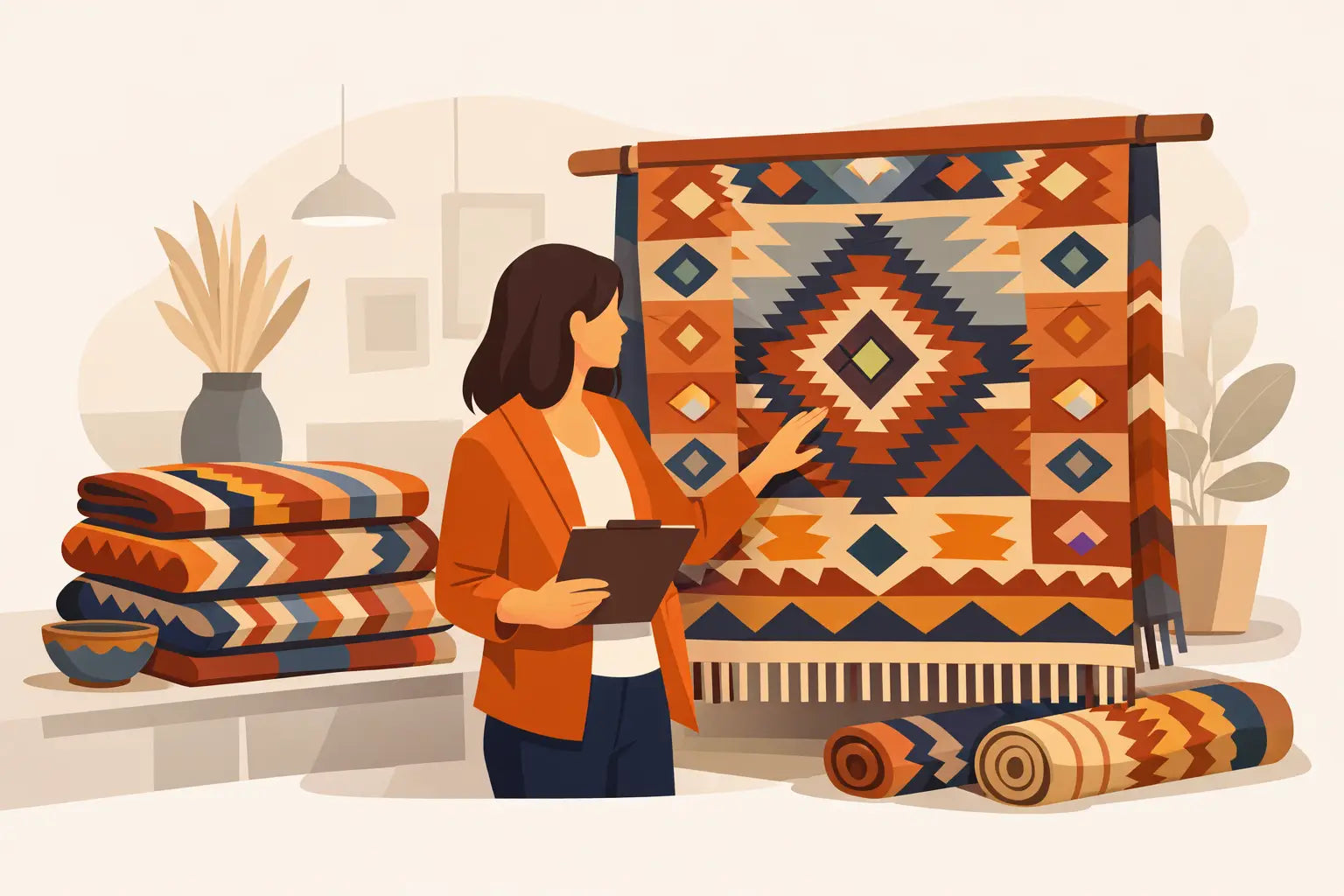
The strongest experience comes when service and expertise play a role. A family business knowledgeable about carpets can help ask the right questions instead of just showing you the most expensive model. That personal advice often makes the difference between a beautiful purchase and a carpet you truly enjoy every day.
Maintenance: keeping it beautiful without hassle
A hand-knotted carpet demands respect but no panic. Regular vacuuming without aggressive settings keeps it surprisingly well in shape. Rotate the carpet occasionally so wear is distributed more evenly, especially in areas with heavy foot traffic or where sunlight falls on one side.
Stains should be treated quickly and gently. Blotting works better than scrubbing. For deeper cleaning, professional maintenance is often the safest choice, especially with wool or silk. That may sound like extra work, but in practice, it’s manageable if you handle the carpet carefully from the start.
Those who want to combine comfort, appearance, and craftsmanship are simply well served with a hand-knotted carpet. The right piece makes your interior warmer, richer, and more personal without being flashy. At Omid Carpets, we believe such a carpet should not only look beautiful in the store or in a photo but above all feel good every day in your home. So don’t rush your choice—choose something you’ll love coming home to again and again.

Leave a comment
This site is protected by hCaptcha and the hCaptcha Privacy Policy and Terms of Service apply.