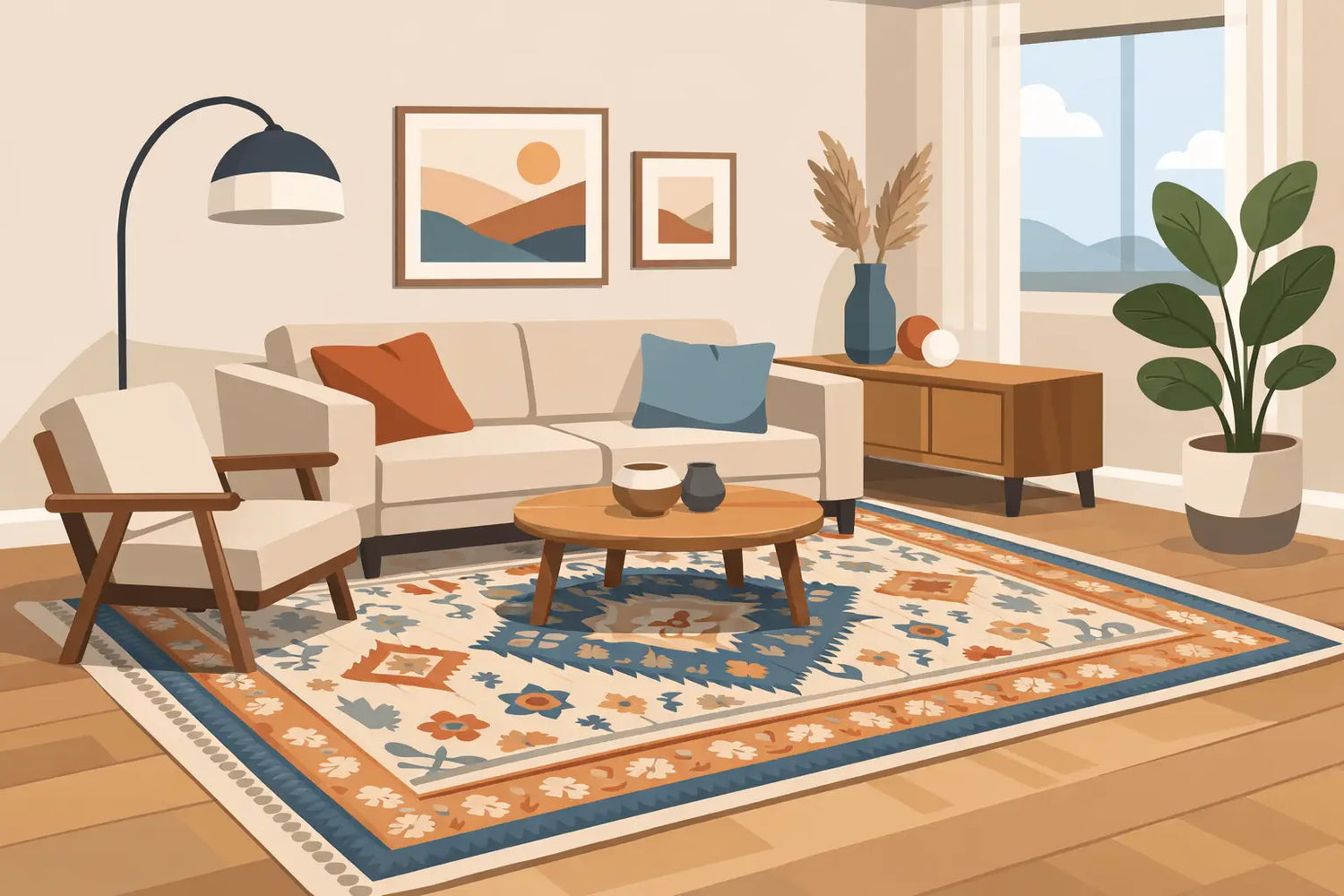
A living room without a carpet can be beautiful, but often still feels just a bit incomplete. A classic living room carpet adds exactly that extra layer of warmth, calm, and character that truly completes a seating area. It pulls furniture together, softens the space, and immediately gives an interior a more polished, rich appearance.
For many people, a classic carpet has something timeless about it. Not stiff or old-fashioned, but elegant and homely. That is also the reason why this style has remained beloved for generations. A well-chosen classic carpet feels familiar, yet can also look surprisingly fresh in a contemporary home.
Why a classic carpet works so well in the living room
A classic design naturally has depth. Think of refined patterns, graceful borders, and colors that bring warmth without being loud. In a living room, this creates visual calm. Especially when you work with a sofa, coffee table, and armchairs in neutral tones, a classic carpet can become the soul of the space.
There is also a practical advantage. In larger living rooms, a carpet helps to clearly define different zones. The seating area feels more compact, cozier, and balanced. In smaller spaces, it can create a sense of cohesion, as long as the size is well chosen.
What appeals to many customers is that a classic carpet fits not only in country or traditional interiors. Even in a modern living room with sleek furniture, the contrast can work beautifully. A simple sofa, metal accents, and a classic floor pattern together add more personality than a completely minimalist setup.
Choosing a classic living room carpet without doubt
The right choice doesn’t start with the pattern, but with the space. How large is your seating area, how much light comes in, and how intensively is the living room used? A family with children has different requirements than a quiet lounge mainly used for receiving guests.
Size is often decisive. A carpet that is too small makes a living room feel fragmented. A model that is too large can feel heavy, especially in a compact apartment. In most cases, it looks best if the front legs of the sofa and armchairs rest on the carpet. This way, everything forms one whole. If you want a distinctly luxurious effect, you can also choose a larger size where almost the entire seating area rests on the carpet.
Color requires just as much attention. Classic carpets are popular in warm red tones, deep blue, beige, ivory, and soft earth colors. Dark colors give a sense of depth and grandeur but show wear less quickly. Lighter shades make the space feel more open and softer, although they often require a bit more maintenance in a busy household. So it depends on what you value more: an airy look or maximum practicality.
The pattern also plays a role. A richly detailed medallion immediately draws attention and fits well in a living room where the carpet is meant to be a focal point. Finer all-over motifs are calmer and easier to combine with striking furniture or curtains. If in doubt, a subtle classic design is usually the safest choice.
Which materials are suitable for daily use?
A classic carpet should not only be beautiful but also feel pleasant and remain practical in everyday life. That’s why material choice is so important. In a living room that is heavily used, it’s best to choose a quality that is comfortable underfoot and at the same time easy to maintain.
Low-pile carpets are a smart choice for many households. They look neat, are easier to vacuum, and are practical under a coffee table or in a seating area where chairs or poufs are often moved. For families or homes with pets, this is often the most practical solution.
Those who mainly seek extra softness can look for a fuller texture, but here applies: more beautiful is not always more practical. A high-pile carpet offers a lot of comfort but is less typically classic in appearance and sometimes requires more intensive maintenance. For a classic living room carpet, many people therefore choose the golden middle ground: a refined, soft pile that looks elegant without becoming difficult to use.
Synthetic fibers are popular because they are strong, colorfast, and often budget-friendly. They offer a nice balance between appearance and convenience. Hand-knotted or more artisanal qualities have a special character and a luxurious look but usually require a larger budget. That difference is not necessarily a disadvantage. It mainly means that there is a suitable solution for almost every living style and budget.
Classically combining with a modern interior
One of the most beautiful qualities of a classic carpet is that it brings atmosphere without the entire living room needing to be classically furnished. It is precisely this mix that often makes an interior more interesting. A sleek corner sofa in beige or greige gains more warmth with a traditional pattern underneath. Wooden furniture, black accents, and a classic carpet often surprisingly enhance each other.
The art lies in balance. If the carpet is rich in detail, keep the rest of the space somewhat calmer. For example, choose plain cushions, simple curtains, and furniture with clean lines. If your living room is already quite expressive with various colors and materials, a classic carpet in soft, muted tones usually works better than a very busy model.
Vintage and classic can also blend beautifully. A slightly aged look gives character without feeling heavy. This appeals to many who like warmth and tradition but don’t want a formal interior. This way, the living room gets a cozy, lived-in appearance that remains stylish.
What to watch for in maintenance?
A carpet in the living room must be able to withstand wear and tear. People walk on it, play, eat, and live there. That’s why maintenance is not a detail but part of the purchase decision. Fortunately, a classic carpet doesn’t have to be difficult.
Regular vacuuming keeps the fibers fresh and prevents dirt from settling. It’s best to treat stains quickly without rubbing hard. This makes a big difference, especially with lighter shades. Those looking for extra convenience should look for easy-care qualities designed for daily use. For many families, this is not a luxury but simply peace of mind.
Anti-slip is also worth mentioning, especially on smooth floors. A carpet that stays in place feels safer and looks tidier. In a family home where children often move and play, this is a practical detail that quickly becomes important.
The right size for your classic living room carpet
This is where things often go wrong in practice. People fall in love with a pattern but forget to first look at the dimensions of their living room. A classic living room carpet truly comes into its own when the proportions are right.
In a compact seating area, a medium-sized carpet can be sufficient as long as it is large enough to visually connect the furniture. In a larger living room, you can think a bit more generously. A larger carpet provides more comfort and creates a more luxurious, finished look.
Also consider the shape of the space. A rectangular carpet often fits best under an elongated seating area. In some cases, a nearly square arrangement works better with a more compact model. The ideal carpet follows not only your taste but also the architecture of the room.
A style choice that brings atmosphere and comfort
A classic carpet is rarely an impulsive purchase, and that’s a good thing. It partly determines how your living room feels when you come home, how cozy an evening on the sofa becomes, and how neat the space looks when you have guests. That’s exactly why it’s worth looking beyond just a beautiful photo.
At Omid Carpets, we notice that customers mainly look for that combination of beauty and convenience. They want a carpet that looks warm, feels soft, and remains affordable in price and maintenance. That is perfectly possible as long as you choose based on your actual living space and not just on trends or color.
A good classic carpet doesn’t turn a living room into a showroom but into a place where you can live with style, comfort, and a feeling of coming home.


Leave a comment
This site is protected by hCaptcha and the hCaptcha Privacy Policy and Terms of Service apply.