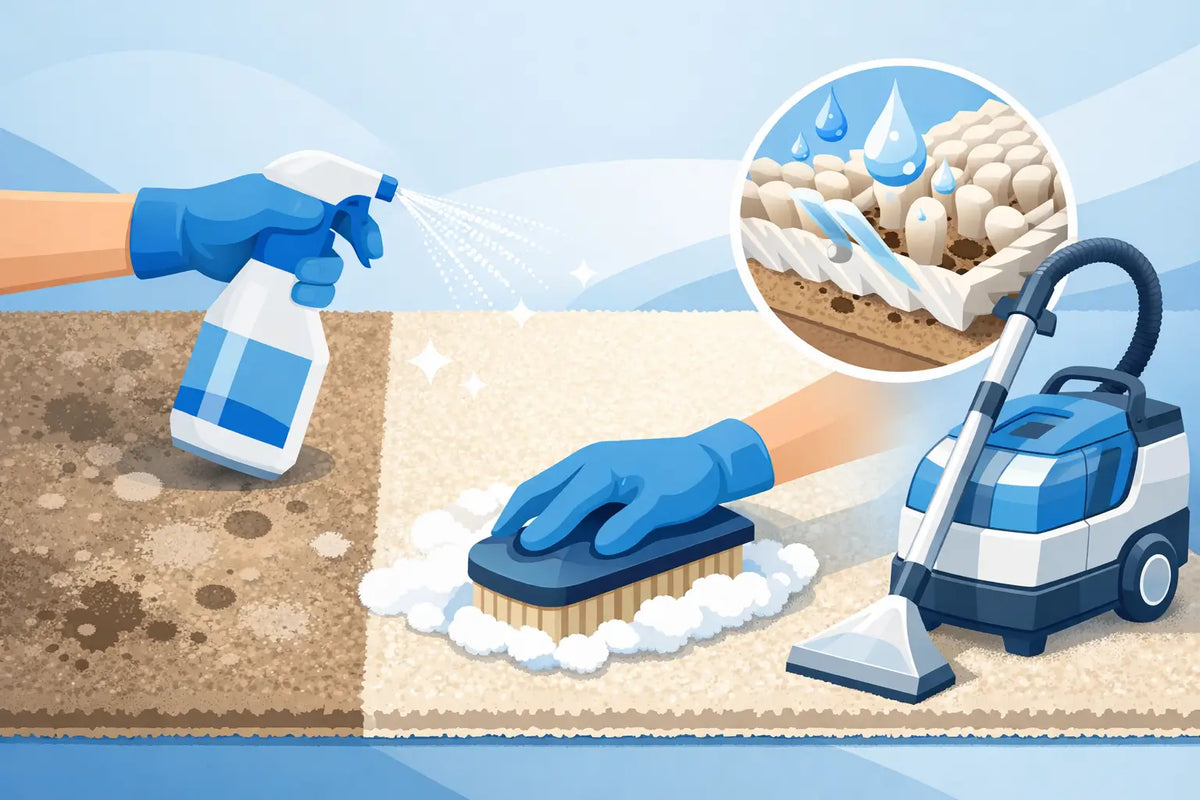
A glass of red wine, muddy footprints, or just the daily layer of dust – it’s all part of a lived-in home. But anyone with a beautiful carpet knows that cleaning carpet without damage isn’t just a matter of spraying a product and scrubbing hard. That’s often where things go wrong: the stain seems gone, but the fibers become dull, the colors fade, or the carpet loses its soft appearance.
Cleaning wisely not only preserves the fresh look of the carpet but also the comfort, lifespan, and ambiance of the room. Especially with a living room rug, a hand-knotted carpet, or a soft children's carpet, you don’t want to take risks with overly aggressive products. A good approach always starts with one simple question: what type of carpet are you dealing with?
Cleaning carpet without damage starts with the material
Not every carpet reacts the same to moisture, heat, or cleaning products. A synthetic rug is often more forgiving than a wool or handmade piece. With polyester and polypropylene, you can usually act a bit faster using a mild carpet cleaner and a damp cloth. Wool requires more gentleness, less water, and especially no alkaline products that can damage the natural fiber.
With hand-knotted carpets, kilims, or finely woven models, it’s even more sensitive. Colors can run, fibers can deform, or fringes can get damaged if you work too wet. Unsure? Then less is always better than more. A cautious test on an inconspicuous spot often saves a lot of regret.
The backing of the carpet also plays a role. Some modern, low-maintenance rugs have a sturdy anti-slip backing and can tolerate more. Other carpets with glue layers or delicate finishes don’t handle excessive water well. Overenthusiastic wet cleaning risks odors, loosening backing, or rippling in the rug.
The biggest mistake: scrubbing as if it’s a tile floor
When faced with stains, the reflex is understandable: act quickly and rub hard. Yet that is often the reason a stain sinks deeper into the fiber. Scrubbing pushes dirt inward, damages the pile, and makes the carpet rough or faded in spots.
It’s better to blot with a clean, dry cloth or paper towel. Work from the outside toward the center so the stain doesn’t spread. Only then use a small amount of lukewarm water or a suitable product, depending on the material. No buckets of water on the carpet, no aggressive all-purpose cleaners, and definitely no bleach. What works on ceramic tiles is rarely suitable for textiles.
For dried stains, it helps to first gently remove loose dirt with a vacuum or soft brush. Then you can treat the spot more precisely. Working calmly usually yields a better result than rushing.
How to safely handle daily cleaning
The best way to maintain carpet cleaning without damage is not to wait until the rug looks visibly dirty. Regular maintenance prevents dust and sand from settling deep between the fibers. Fine sand especially acts like sandpaper under shoes or playing children.
Vacuuming is therefore the foundation, but nuance is important here too. Preferably use a setting that matches the pile height. For high-pile carpets, a brush that’s too strong can pull fibers loose or make them fuzzy. For low-pile, washable rugs, you can often vacuum a bit more thoroughly. Vacuum gently in the direction of the pile and avoid twisting fringes into the nozzle.
Occasionally rotating a carpet also helps. This distributes wear from sunlight, foot traffic, and furniture. It’s not cleaning per se, but a simple way to keep the carpet looking good longer.
Treating stains without panic
Fresh stains require speed, not force. For coffee, soda, or wine, first blot up as much moisture as possible. Then use a slightly damp white cloth with lukewarm water. If that’s not enough, choose a mild cleaner suitable for carpet and always test for colorfastness first.
For grease stains, water alone is often insufficient. Then a specialized textile cleaner helps, but again in small amounts. Too much product leaves residues that attract dirt later. Sometimes you only notice this weeks later when the spot darkens compared to the rest of the carpet.
For mud, the opposite applies: let it dry first. Smearing wet mud only makes it worse. Once dry, you can gently vacuum up the loosened dirt and clean the rest locally.
When water is okay—and when it’s not
Many people think a carpet only gets truly clean with lots of water. That’s only partly true. Light moisture can be useful; soaking cleaning usually isn’t. Too much water soaks into the backing, dries slowly, and can cause odors. In apartments, bedrooms, or less well-ventilated spaces, that risk is even greater.
For small stains, spot cleaning is almost always the best choice. For general freshening, you can consider a lightly dampened treatment or a carpet cleaner with limited dosage. But a fully wet deep cleaning is more suited to sturdy synthetic carpets or professional cleaning.
Wool and hand-knotted carpets require extra caution. Excess moisture can affect the structure or cause color migration. If you see natural dyes, a fine pattern, or a valuable piece with craftsmanship, professional advice is often the safest step.
Cleaning carpet without damage for different types of carpets
A modern low-pile rug in the living room generally tolerates more than a soft high-pile bedroom rug. Washable models are obviously the most practical for families with children or pets, as long as you follow the washing instructions carefully. Temperature, spin speed, and drying method really make the difference.
A classic carpet with a rich pattern requires more care. You want to preserve the shine, design, and color depth. Always clean gently and avoid products with strong perfumes or chemical compositions that leave residue. With hand-knotted carpets, caution is even more important because each piece reacts differently to moisture and cleaning.
If you have a children’s carpet or a carpet in a high-traffic area, ease of maintenance pays off extra. In such cases, it’s smart to consider material, pile height, and washability when purchasing. Choosing practical options makes life much easier later.
Home remedies are not always harmless
Vinegar, baking soda, and dish soap are often mentioned as quick fixes. Sometimes they work, but not on every carpet and not in every ratio. Vinegar can be too harsh for certain fibers or dyes. Baking soda sometimes leaves residues deep in the pile. Dish soap foams quickly and is hard to fully remove from the carpet.
That doesn’t mean every home remedy is wrong, but you should use them sparingly and consciously. A safe, mild textile cleaner suited to the carpet type is usually more predictable. Especially for a larger rug that adds a lot of atmosphere to your interior, you’d rather avoid experiments that cause permanent damage.
When professional cleaning is the smartest choice
Some stains, odors, or dirt just won’t come out nicely at home. Think of old pet stains, deeply embedded dirt, or delicate high-value carpets. Then professional cleaning is not a luxury but a way to avoid damage.
A specialist considers fiber, colorfastness, construction, and degree of soiling. You often notice the difference clearly afterward. The carpet looks fresher, feels softer, and retains its shape better. Especially with quality carpets, that’s often the best long-term investment.
If you’ve just bought a new carpet, it’s smart not to wait until it’s heavily soiled. Good maintenance from the start noticeably extends its lifespan. At Omid Carpets, we often see that customers remain most satisfied with their carpet when they clean gently, regularly, and material-specifically from day one.
How to keep your carpet looking beautiful longer in daily life
Cleaning alone isn’t enough if you want to keep your carpet in top shape. A good doormat at the entrance, taking shoes off indoors, and quick response to spills make a big difference. Sunlight also deserves attention. Bright, direct sun can fade colors over time, especially with natural materials.
If possible, place furniture with protection under the legs and occasionally move it slightly. This prevents deep pressure points. In dining rooms, it helps to be extra alert to crumbs and stains around table legs and chairs. In children’s rooms, washable or low-maintenance carpets are often the most relaxed choice.
A beautiful carpet does much more than just cover the floor. It brings warmth, softness, and character to your home. That’s why it deserves a maintenance method as thoughtful as your interior choices. Those who work calmly, respect the material, and don’t rush will find carpet care doesn’t have to be a burden but simply part of comfortable living.
A well-cared-for carpet not only stays beautiful longer under your feet but also in the atmosphere of your entire home.


Leave a comment
This site is protected by hCaptcha and the hCaptcha Privacy Policy and Terms of Service apply.