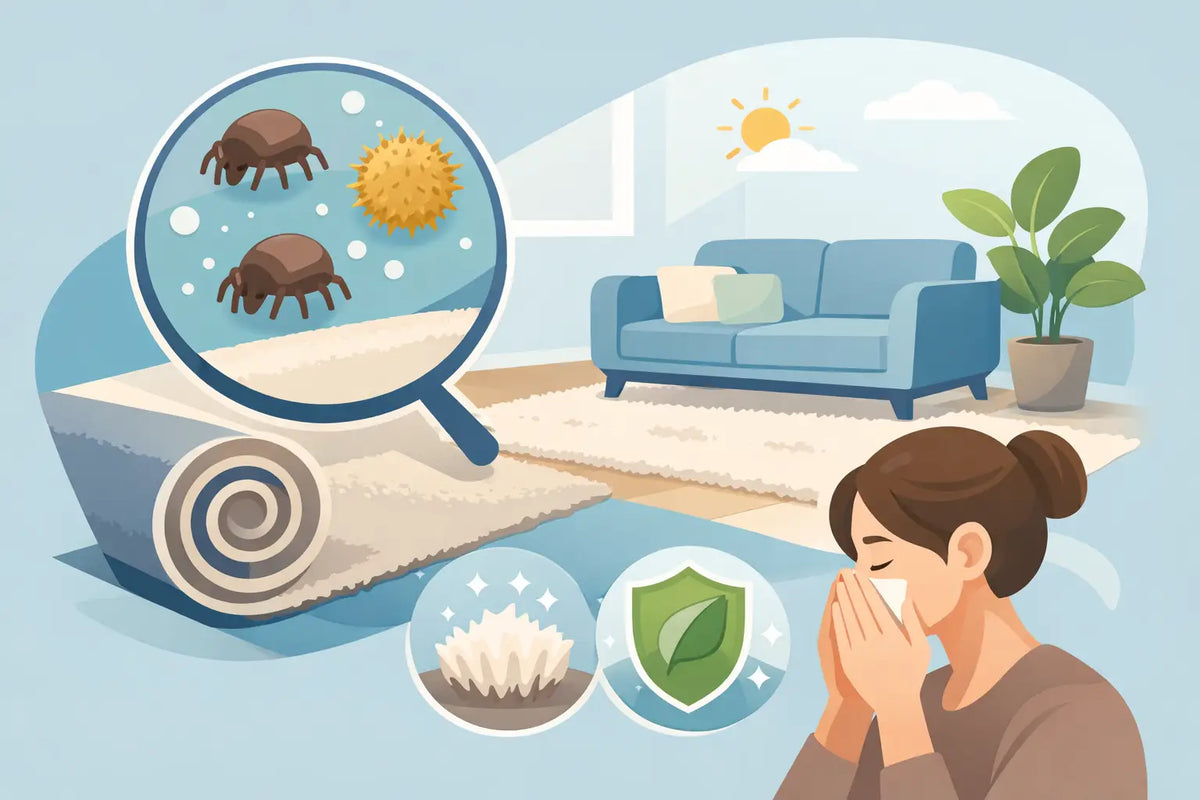
A soft rug underfoot doesn’t have to be a problem if you are prone to allergies. The question of which carpet is suitable for allergies is less about one miracle material and more about a smart combination of pile height, maintenance and placement. With the right model, you can create a warm living room or cosy bedroom without cleaning becoming an endless task.
A carpet is sometimes immediately ruled out in an allergy-friendly interior. That is a shame, because a well-chosen and well-maintained rug can actually help trap dust particles until you vacuum them up. The difference lies in how easily dirt, hair and dust mites can settle into the material. So if you choose carefully, you do not have to choose between an inviting home and a fresh feeling.
Which carpet is suitable for allergies in the home?
For most families with allergies, a low-pile, tightly woven and easy-to-maintain carpet is the wisest choice. The fibres are short, so dust and pet hair do not sink as deeply. You can spot dirt more quickly and remove it more easily with a vacuum cleaner. This makes a low-pile rug particularly suitable for the living room, bedroom and hallway.
A flat-weave carpet or kilim is also a strong option. This type has no raised pile in which particles can accumulate. The flat texture looks refined and modern, suits both a calm Scandinavian interior and a warmer, classic interior, and is easy to clean regularly. For those who want as little maintenance as possible, this is often the most practical choice.
Washable carpets also deserve a place on your shortlist. Especially in a household with children, pets or a dust allergy, it is useful to be able to wash a rug thoroughly from time to time. Always choose a size that remains practical to handle and carefully follow the washing instructions. A washable low-pile model with an anti-slip backing combines comfort, safety and ease of use beautifully.
Choose short, dense fibres
It is not only the length of the pile that matters. Density also makes a difference. A tightly woven carpet with short fibres retains its shape better and makes it less easy for dirt to penetrate deeply into the base. It feels pleasant underfoot but requires less intensive maintenance than a high-pile or loosely woven alternative.
A high-pile carpet is, of course, irresistibly soft and immediately gives a bedroom or seating area a luxurious appearance. However, it is often less suitable for people with pronounced dust mite allergies. Crumbs, skin flakes and hair disappear more quickly between the long fibres, making thorough vacuuming more time-consuming. Do you still love that full, soft feel? Then place a smaller high-pile accent rug in a low-traffic area instead of choosing wall-to-wall carpet.
Materials: synthetic, wool or natural?
Synthetic materials such as polypropylene and polyester are often an excellent choice for an allergy-friendly carpet. They are generally hard-wearing, colourfast and easy to clean. Stains are less likely to soak in than with many natural fibres, which is useful in a busy household. What’s more, there are now many modern synthetic rugs that feel surprisingly soft and look refined.
Polypropylene is particularly popular in living spaces. The material is strong, easy to maintain and suitable for those who want to vacuum frequently. Polyester, on the other hand, has a soft, almost velvety appearance and works beautifully in bedrooms or beneath a coffee table. Both materials still require regular maintenance, but they offer much more convenience than a thick, deep pile.
Wool is a natural and beautiful material with character. A high-quality wool carpet can partly retain dust particles until you remove them, and wool naturally regulates moisture. However, wool is not the best choice for everyone. New wool carpets may shed a little at first, and if you have a rare, specific wool allergy, it is better to avoid the material. Those who mainly react to dust mites can consider wool, but should opt for a low-pile quality and follow a consistent maintenance routine.
Natural fibres such as jute and sisal add plenty of texture to the home, but their coarser structure makes them less easy to clean. They fit beautifully into a dry, calm interior, but are generally not the first choice when allergy control is the priority. Removing stains is more difficult and intensive wet cleaning is not recommended.
Also pay attention to the backing and finish
The underside of a carpet may seem like a detail, but it is not. An anti-slip backing prevents the rug from shifting when you vacuum or when children play. This provides extra safety and prevents dirt from accumulating underneath a rug that is constantly moving.
Preferably choose a finish without extremely long fringes. Fringes look decorative, but can hold extra dust and require more attention during cleaning. A neatly bound edge is often the simplest and most durable solution in an allergy-friendly household.
The right placement makes a big difference
In the bedroom, the choice matters most because you spend many hours there. A small, washable, low-pile rug beside the bed is often more convenient than a large, thick carpet beneath the entire bed. This way, you retain that pleasant warm feeling when getting up without creating a large surface that requires extensive maintenance.
In the living room, a larger low-pile carpet can be highly functional. It brings the sofa, coffee table and armchairs together into one cosy seating area and dampens sound in a room that is actively used. Choose a size large enough for the front legs of the sofa to rest on it. A rug that is too small looks unsettled and shifts more easily.
For a child’s room, washability and a low pile are almost always the best qualities. Playing on the floor should feel soft and comfortable, but parents also want to be able to respond quickly to spilled drinks, sand brought in from outside or pet hair. A cheerful children’s carpet that is easy to maintain keeps the room inviting and practical.
Maintenance: this is where you gain the most
Even the most suitable carpet for allergies benefits from a regular routine. Vacuum slowly at least once or twice a week and in different directions. If you have pets or severe allergy symptoms, vacuuming more frequently is advisable. A vacuum cleaner with a good fine-particle filter or HEPA filter helps keep the particles you collect inside the appliance.
Treat stains immediately using a gentle, suitable cleaning method. Scrubbing too hard can damage the fibres and may actually make an area more susceptible to new dirt. Always allow a cleaned carpet to dry completely. Moisture that remains in a carpet is never desirable and can cause a musty smell.
Also plan a deeper clean from time to time, depending on how the room is used. For a washable rug, follow the instructions on the label. For larger or delicate carpets, professional cleaning can be a good option. Do not beat a carpet outside if pollen is an important trigger for you: you may simply bring extra pollen indoors.
Do not forget the floor beneath the rug. Lift the rug regularly, vacuum the underside and clean the floor underneath. Especially with a large rug in the living room, this small habit can make a noticeable contribution to a fresher home.
A beautiful choice that remains practical
Allergy-friendly does not have to look cold or boring. Low-pile carpets are available in soft neutral shades, calm patterns and warm earthy colours that immediately add more depth to your interior. A subtle design is also more forgiving in everyday use than a plain, very light rug on which every hair is visible.
At Omid Carpets, you will find low-pile and washable rugs that beautifully combine comfort and ease of maintenance. Do not only consider the colour that matches your sofa; also think about which texture suits your daily life. A carpet that you enjoy looking at and can care for easily will remain a source of warmth in your home for the longest time.



Leave a comment
This site is protected by hCaptcha and the hCaptcha Privacy Policy and Terms of Service apply.