
A beautiful rug under the dining table makes every meal feel warmer. But crumbs, a knocked-over glass of red wine or enthusiastic children’s hands are simply part of a lived-in home. Keeping a dining room rug clean therefore requires no stress, just a smart choice and a few consistent habits.
The good news: you do not have to choose between an inviting dining room and a practical floor. With an easy-care low-pile rug, the right dimensions and quick action when stains occur, your dining area will look well cared for every day. Even when you are enjoying an elaborate meal.
First choose a rug that can handle everyday life
When choosing a rug for the dining room, it is best to look beyond colour and design. Under a table, a rug has to endure a lot: chairs slide, crumbs disappear between the fibres and spilled drinks have little time to dry. The choice of material therefore largely determines how much maintenance you will need later.
A low-pile rug is often the most comfortable choice for families and busy dining areas. Crumbs and dust do not settle as deeply as they do in a high-pile rug, making vacuuming easier. Chairs also slide more smoothly across it. A flatweave model or a fine low-pile rug gives the dining room a calm, elegant foundation without requiring you to constantly reach for the handheld vacuum.
Synthetic fibres such as polypropylene are particularly popular in dining areas. They are strong, colourfast and generally more resistant to stains than many natural fibres. A washable rug offers even more convenience, especially in a household with young children or pets. You can deal with many minor accidents without immediately having to arrange professional cleaning.
Wool feels luxurious, dampens sound and has a natural appearance. However, a wool rug under the dining table requires a little more attention. The fibre handles dirt well, but does not like retaining moisture for long. Choose wool primarily if you are prepared to act quickly when spills occur and have the rug carefully cleaned when necessary.
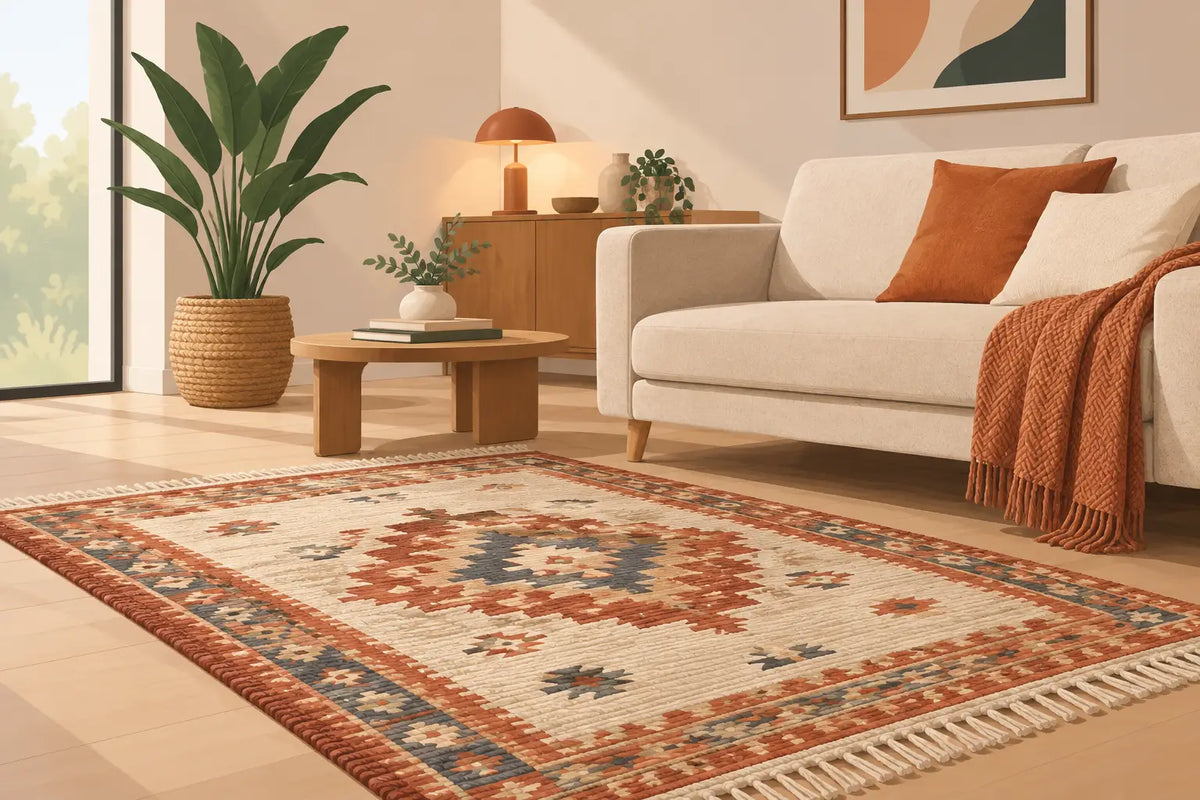
Colour also does a lot of the work for you. A plain, very light rug looks fresh, but shows every crumb and drop immediately. A marled design, a soft mid-tone or a subtle pattern is more forgiving. Consider taupe, sand, warm grey, terracotta or deep blue. This way, the room remains stylish even between two vacuuming sessions.
Keeping a dining room rug clean starts with the right routine
A rug rarely becomes dirty all at once. Usually, it is small amounts of dust, sand and food residue that gradually build up. By following a simple routine, you prevent dirt from settling into the fibres and making the colours look duller.
Vacuum the rug at least once a week, and more often if you eat at the table every day. With a low-pile rug, use a suitable setting so you do not pull too hard on the fibres. Vacuum slowly in different directions, especially underneath and around the chairs. Crumbs collect there faster than you might think.
Turn the rug halfway around several times a year. This distributes the pressure from chairs and walking routes more evenly and keeps the colour more uniform. At the same time, check the non-slip backing or underlay. A rug that stays firmly in place is not only safer; it also wears out less quickly due to sliding furniture.
Do not let chairs constantly scrape over exactly the same spot. Felt pads under chair legs make a big difference, especially with wooden or metal chairs. They protect both your floor and the rug fibres. With heavy table legs, you can carefully reposition the rug from time to time to prevent permanent pressure marks.
What should you do with wine, sauce or coffee?
With a fresh stain, the first minute matters most. Blot immediately with a clean, white cloth or kitchen paper. Never rub vigorously back and forth, as this pushes the stain deeper into the fibres and makes the affected area larger. Work from the outer edge towards the centre so the stain does not spread.
Then use a small amount of lukewarm water and blot again. Too much water is not a good idea: a soaked rug dries slowly, can retain odours and may even become misshapen with some materials. If the stain is grease-, dye- or sauce-based, use only a cleaning product suitable for your specific rug material.
Always test a product first on an inconspicuous corner. It may sound overly cautious, but it prevents pale patches or discolouration. Avoid aggressive all-purpose cleaners, bleach and heavily perfumed products. They can sometimes replace a stain with a much more visible area of damage.
With red wine, coffee or tomato sauce, blotting quickly is usually more important than trying all kinds of household remedies. With candle wax, let the wax harden first and remove it carefully without pulling on the fibres. For stubborn, old or large stains, professional cleaning is often the safest choice, especially for wool, viscose, silk and hand-knotted rugs.
Create a practical layout for your dining area
The size of your dining room rug has a surprisingly significant impact on maintenance and comfort. A rug that is too small means the chair legs constantly scrape over the edge. This is uncomfortable when sitting and accelerates wear. Therefore, choose a size that allows the chairs to remain completely on the rug even when pulled out.
Measure not only the table, but also the space you need to slide the chairs back comfortably. Usually allow around 60 to 75 centimetres of extra space on each side of the table. A round rug works particularly well with a round table, as long as the chairs fit on it comfortably. Under a rectangular table, a rectangular rug generally creates the most harmonious look.
A rug with a subtle design is not merely decorative in an active dining area. It helps make small stains, crumbs and light signs of use less visible. This does not mean you need to do less maintenance, but it does mean your interior will look well cared for longer while you simply enjoy everyday life.
Washable, classic or hand-knotted: maintenance varies
Not every rug requires the same treatment. Washable low-pile models are made for convenience and fit perfectly in a lively dining area. Always follow the care label: the correct temperature, a gentle cycle and thorough drying are essential for maintaining the rug’s shape and colour.
A classic patterned rug can give a dining room a rich, timeless look and is often forgiving of small stains. With a hand-knotted rug or kilim, the material deserves extra respect. These pieces bring craftsmanship and character into your home, but require adapted cleaning. Do not use a steam cleaner or strong products without knowing whether the fibres are suitable for them.
That is why families often turn to models at Omid Carpets that combine beauty with everyday comfort. A soft low-pile rug with a non-slip backing can instantly make the dining room cosier without turning maintenance into a weekend task.
Small habits that make a big difference
A regular place for coasters, a quick check after eating and clearing away crumbs immediately: these are small actions with a major effect. Do not place hot pans directly on the rug, and be careful with plants near the dining table. Water leaking from a pot can quietly cause a damp patch.
Do you have children? Then do not cover the entire rug with a plastic protective layer. It takes away the warmth of the room and can retain moisture. A well-chosen washable rug is often a more attractive and practical solution. After all, you want your dining room to invite people to come together, not feel like a room that may only be looked at.
A rug under the dining table is allowed to bear the marks of happy moments. With a durable fibre, a colour that suits your family and a little attention after each meal, it will remain the soft, stylish foundation for many more enjoyable dinners to come.


Leave a comment
This site is protected by hCaptcha and the hCaptcha Privacy Policy and Terms of Service apply.