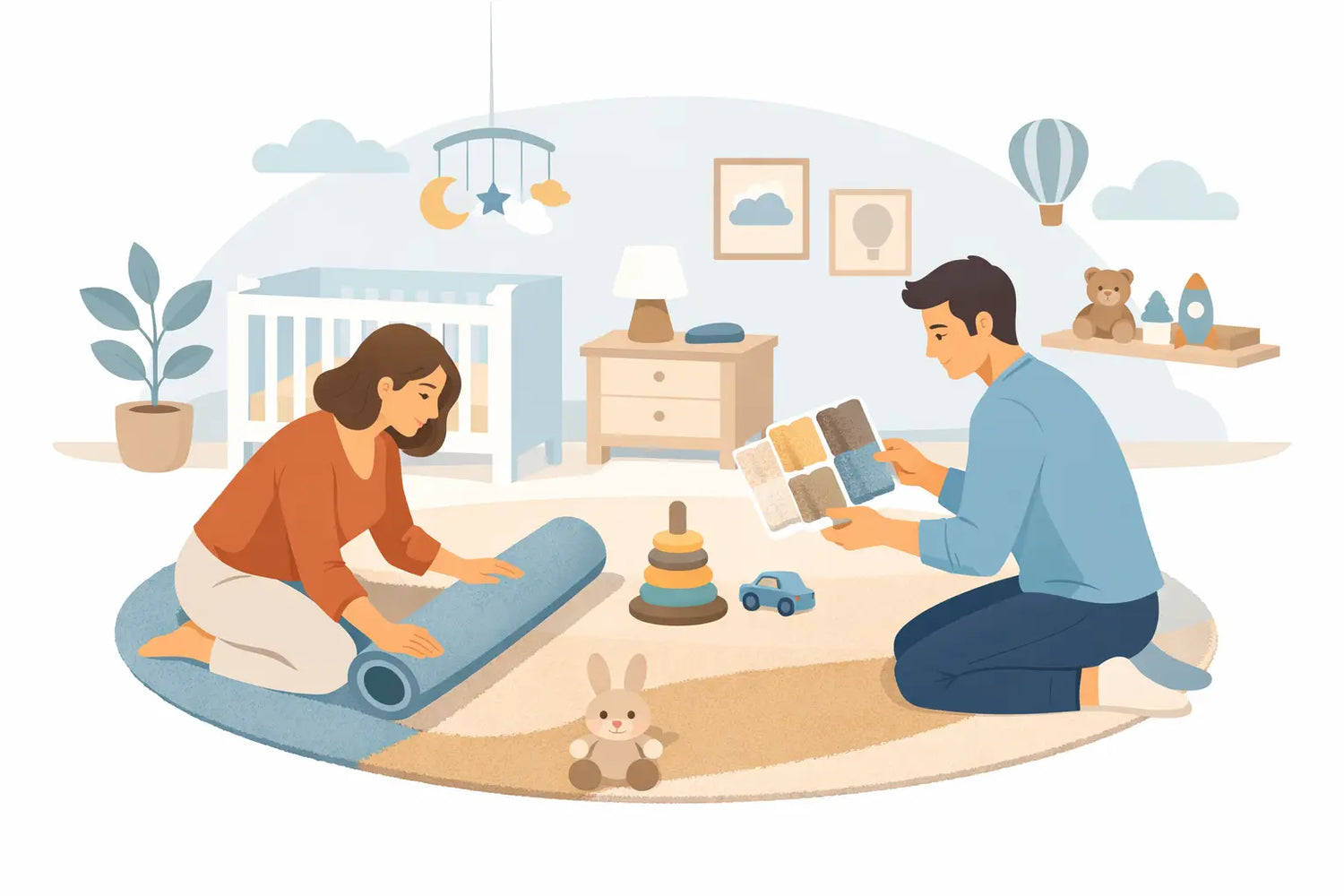
A children's room carpet needs to do more than just look nice. It sits in the middle of a room where children play, read, build, crawl, and sometimes spill. That's why it's worth considering not only color or pattern but also softness, maintenance, and grip. A smart choice brings home a carpet that makes the room warmer and daily life much easier.
Why a children's room carpet makes such a difference
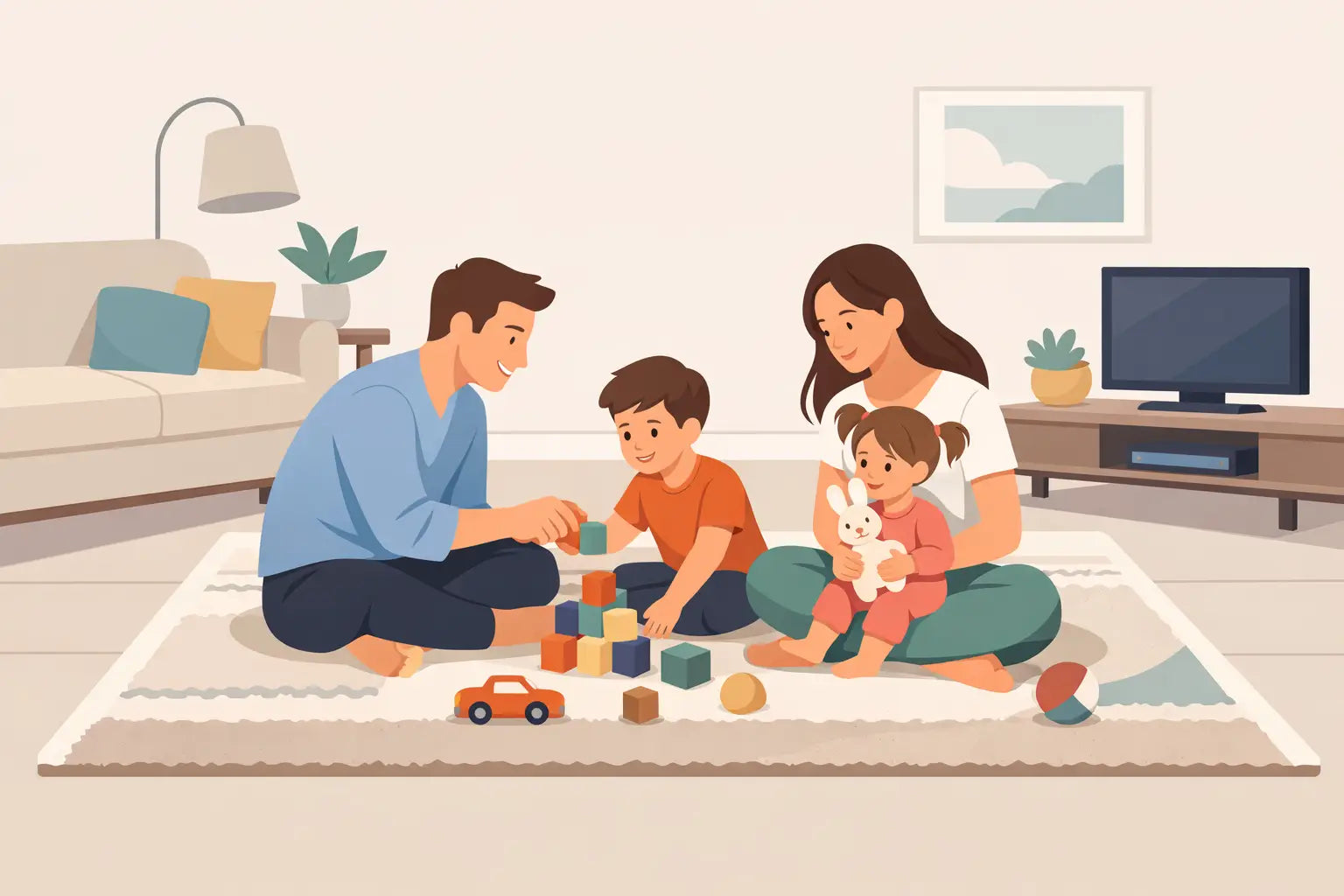
Everything in a children's room happens close to the ground. That's where a train track is built, a puzzle is completed, or a quick bedtime story is read. A hard floor quickly feels cold and less inviting. A good carpet immediately adds softness and coziness to the space, and you feel that every day.
Additionally, a carpet dampens sound. That may seem minor until toys end up on the floor or little feet start moving early in the morning. Especially in families where comfort and quiet are important, that extra sound absorption makes a noticeable difference. Visually, it works just as well: a carpet defines the play area, adds color to the room, and makes the space feel more finished.
What to look for first in a children's room carpet
The most beautiful choice is not always the smartest. In a children's room, a carpet must primarily fit real family life. That means ease of use is at least as important as appearance.
Softness and comfort
A children's room calls for a pleasant surface. Soft fibers make playing on the floor more comfortable and give the room a cozy atmosphere. However, extra softness doesn’t automatically mean you should choose a very high-pile model. High-pile carpets feel luxurious but tend to trap dust and crumbs more easily. For many families, a low-pile or medium-pile carpet is therefore the more practical choice.
Safety in daily use
A carpet that shifts is simply not a good idea in a children's room. An anti-slip backing is a real plus, especially on smooth floors like laminate, tile, or vinyl. This keeps the carpet in place during play, walking, and roughhousing.
Finishing also matters. A well-finished carpet stays in better shape and withstands intensive use better. Children use a carpet differently than adults—they jump on it, pull at it, and roll over it.
Maintenance without hassle
Anyone with children knows that stains are not an exception but part of the package. Paint, cookies, juice, or muddy socks—they all come with the territory. That’s why ease of maintenance is often decisive. Washable models or low-pile carpets that are easy to vacuum fit better with a busy family rhythm than delicate fabrics that require a lot of care.
A children's room doesn’t have to stay perfect. It needs to be livable. That’s why many parents prefer a carpet that can take a beating over a model that only looks good in photos.
The right size for your children's room carpet
The size strongly influences how the room feels. A carpet that’s too small seems lost in the space, while one that’s too large can make the room feel heavy. The right size brings balance.
In a smaller children's room, a carpet often works best when it marks the play area without running wall to wall. Under a bed, a carpet can nicely extend partly, creating a soft surface next to the bed. In larger rooms, a bigger carpet can connect multiple zones, such as the bed, a reading corner, and a play area.
If in doubt, it’s a good idea to visually define the space first. Think about where the child plays most often and where the carpet provides the most functional comfort. A carpet is not just filler but an active part of the room.
Color and style – playful is fine, but smart is better
A children's room can be cheerful, but that doesn’t mean every carpet has to be full of bright colors or busy patterns. Sometimes a calm basic design works much better, especially if the room already has color from toys, wall decorations, or bedding.
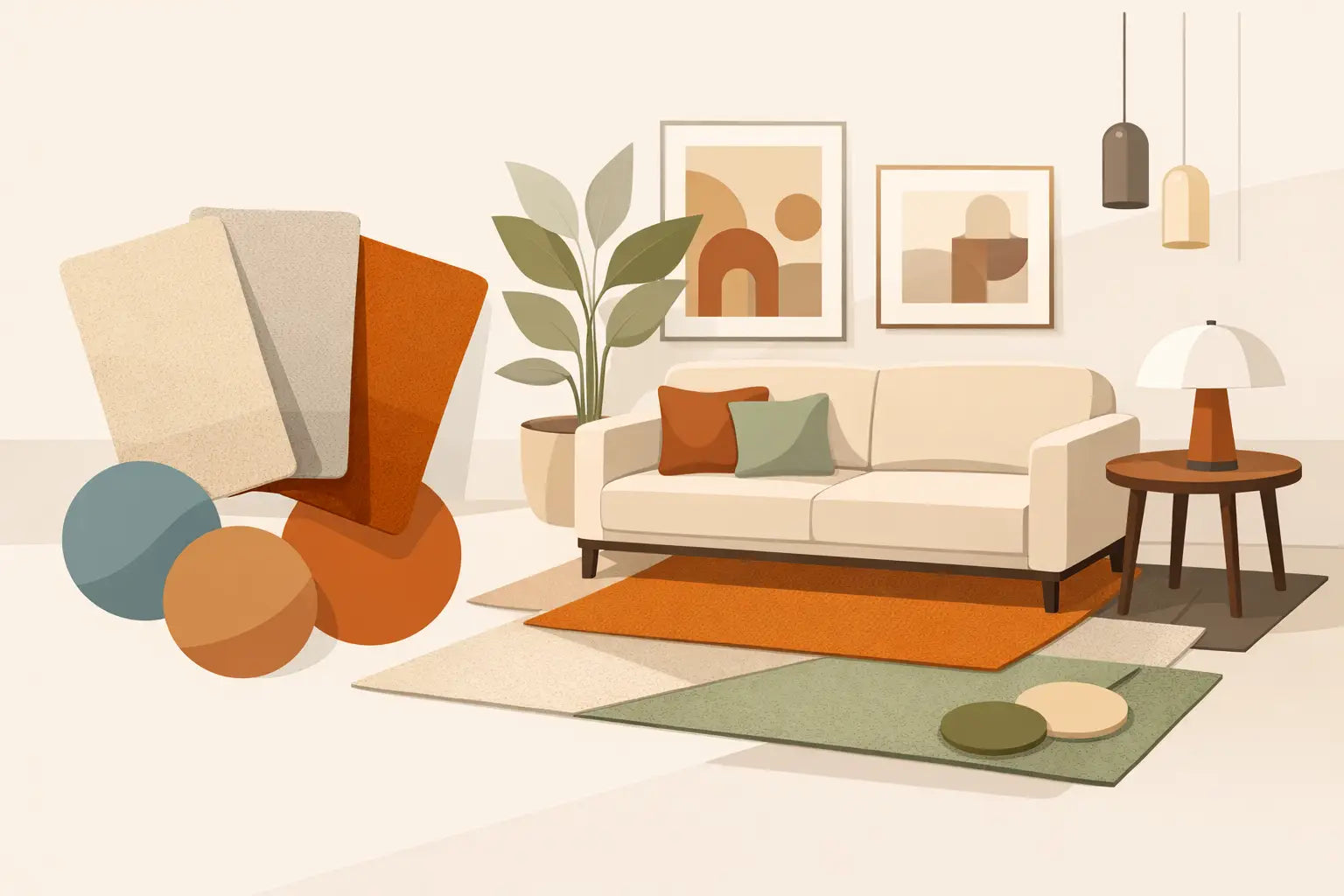
Neutral tones like beige, cream, light gray, or soft sand colors bring warmth and easily grow with the child’s age. Pastel shades create a soft, calm atmosphere. For more character, you can choose stars, clouds, animals, or subtle playful patterns without making the room look too busy.
Growing with the child is important. A very distinctive baby design can feel less fitting after a few years. A stylish children's carpet with a soft print or timeless motif often stays beautiful in the room longer, even as the decor changes.
High-pile or low-pile?
This is typically a choice that depends on your family. A high-pile carpet feels wonderfully soft and adds a lot of warmth to the space. For a quiet bedroom or a corner mainly used for reading and cuddling, that can be perfect.
But in a room where intensive play happens, low-pile is often more practical. Toys roll over it more easily, blocks stand more stably, and vacuuming is quicker. For children with allergies or parents who want a practical choice, a shorter pile is usually the safer option.
The best children's room carpet is therefore not automatically the softest model in the showroom. It’s the one that fits how your child really uses the room.
Material makes the difference
Not every material behaves the same. Synthetic fibers are popular in children's rooms because they are often strong, colorfast, and easy to maintain. They handle intensive use well and are usually easier to keep clean.
Natural materials have a warm, authentic look but sometimes require a bit more care. That can be fine in a quiet room, but for young children, many families prefer a less delicate solution.
That’s why washable, soft, low-pile carpets with anti-slip backing are so popular today. They combine comfort with convenience, and that exact combination makes the difference in a home where real life happens.
A carpet that stays beautiful in a busy family
When buying a carpet for a children's room, you want to enjoy it for a long time. Being realistic helps. Pure white looks beautiful but shows stains more quickly. A very dark color hides dust better but can make the room feel smaller. Mixed tones or soft patterns are often a smart middle ground: warm, stylish, and forgiving in use.
Placement also matters. In a room with lots of daylight, light and soft colors often look best. In a cozier space, a warmer carpet can enhance the atmosphere. So think not only about the carpet itself but about the overall look of the room.
At Omid Carpets, we notice that families especially fall for models that look cozy right away but remain practical to maintain. That’s no coincidence. A good purchase doesn’t feel like a compromise between beauty and practicality—it brings both together.
When a cheaper carpet is enough, and when it’s not
Not every children's room requires the same solution. For a guest room or a room that’s used only occasionally, a simple and affordable carpet can be perfect. But in a bedroom where daily play happens, it often pays off to choose something a bit better.
A solid carpet keeps its shape longer, feels more pleasant, and usually looks better with intensive use. That doesn’t mean you always need the most expensive model. But quality shows in places where a lot happens. In families, that difference is usually noticeable sooner than expected.
How to choose with more confidence
If you’re unsure between two models, ask yourself a few honest questions. Will this carpet be easy to clean after a busy week? Will it stay safely in place on the floor? Will the style still fit if the room changes in two or three years? And does it really feel comfortable for a child who plays a lot on the floor?
If the answers are positive, you’re already far along. Then you choose not just based on a pretty photo but on how your home really lives. And that’s exactly where a good choice makes the difference.
A children's room only truly feels warm when it invites playing, resting, and growing up. A well-chosen carpet helps with that every day, quietly but noticeably—under little feet, beside the bed, and in all those ordinary, valuable moments at home.

Leave a comment
This site is protected by hCaptcha and the hCaptcha Privacy Policy and Terms of Service apply.