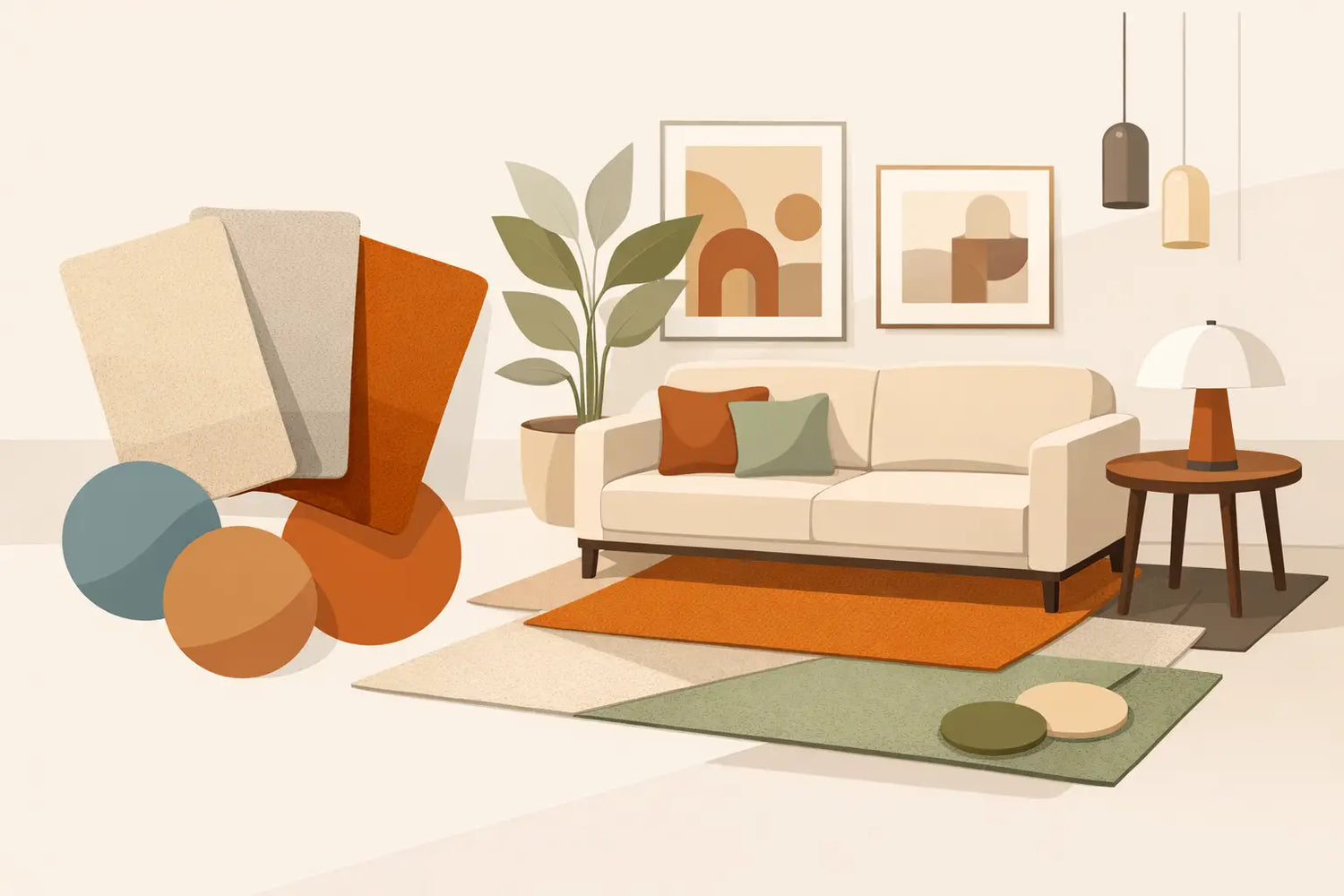
A carpet can instantly complete a room, but choosing the color is often the hardest part. When combining carpet colors in interior design, it’s not just about what looks good in the store, but especially about what brings calm, warmth, and cohesion at home. A beige sofa, wooden floor, or dark dining chair completely changes how a color appears on your carpet.
Why the color of a carpet makes such a difference
A carpet literally forms the foundation of your interior. It helps determine whether a space feels light and airy, warm and cozy, or sleek and modern. Those who focus mainly on furniture and choose the carpet last often find that the room doesn’t quite feel right.
The right color works as a unifier. It brings together the sofa, curtains, wall colors, and accessories into one cohesive whole. The wrong color doesn’t have to be ugly, but it can make a room feel busy, dull, or unbalanced more quickly. That’s why it’s worth considering not only your favorite color but also the lighting, material, and daily use.
Combining carpet colors by interior style
There is no fixed rule that works in every home. The best combination depends on your style, family situation, and the atmosphere you want to create.
Calm and timeless interiors
If you like a soft, elegant base, neutral tones are often the safest and most beautiful choice. Think of cream, sand, taupe, greige, and light gray. These colors bring calm and make furniture stand out better. In a living room with beige, white, or wood tones, such a carpet creates a harmonious look that remains beautiful for years.
An important advantage is that neutral carpets easily combine with changing accessories. If you like to change cushions, throws, or wall decorations, you don’t have to replace your rug immediately. This is especially practical in family homes.
Warm and cozy interiors
If you want more warmth, earth tones work particularly well. Terracotta, rust, caramel, olive green, and deep beige give an interior character without demanding attention. They pair beautifully with wood, linen, wool-look fabrics, and natural materials like rattan or ceramics.
In Belgian homes, where the light is often softer and grayer than in southern interiors, warm carpet tones can really make a difference. They take the chill out of a room and make a seating area more inviting. This feels especially pleasant in autumn and winter.
Modern and sleek interiors
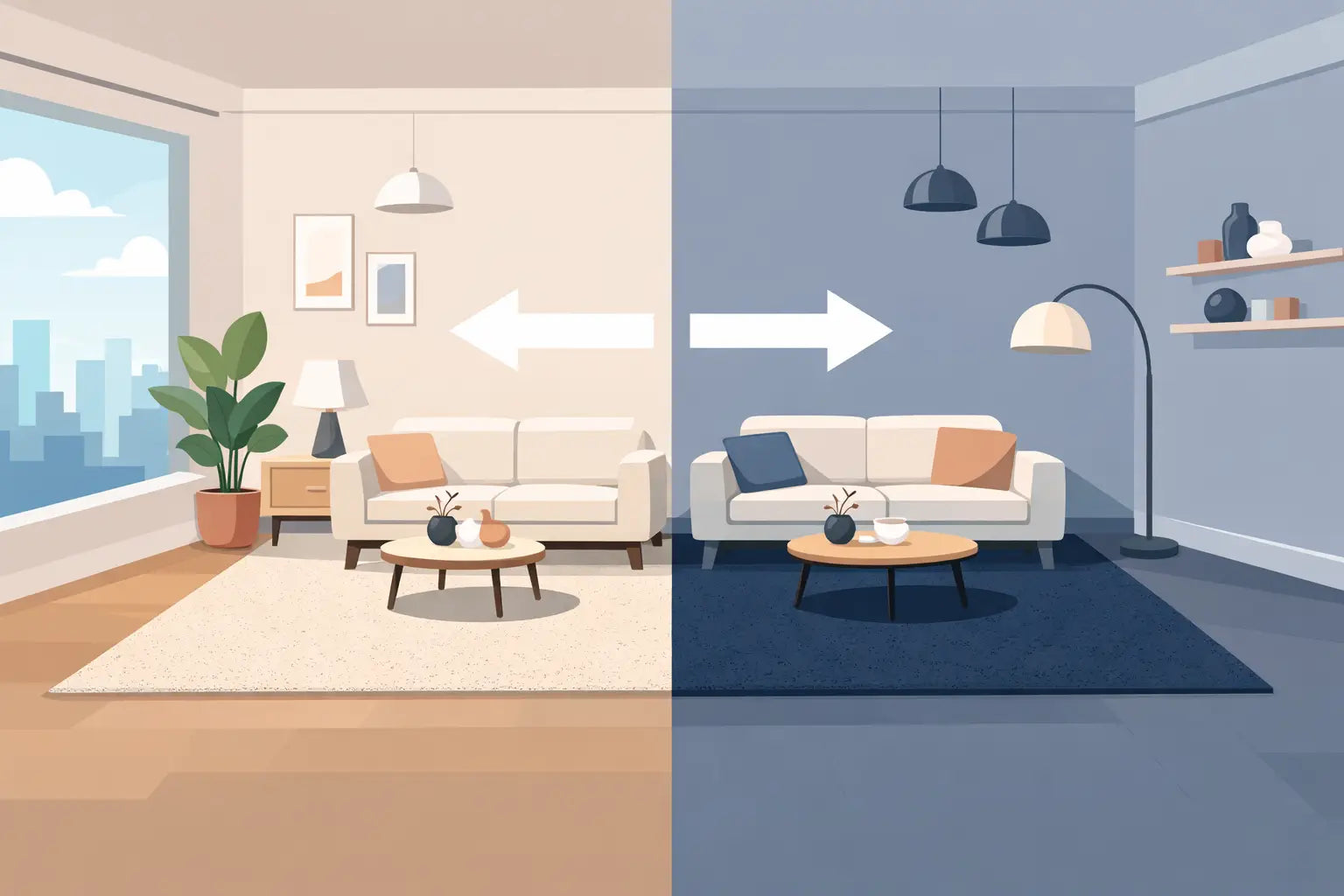
If you have a contemporary interior with black accents, clean lines, and minimalist furniture, a darker carpet can be very effective. Anthracite, stone gray, deep blue, or a carpet with subtle contrast patterns adds depth and a luxurious feel. In a large space, this helps prevent the room from feeling empty.
However, nuance is important here. A dark carpet looks chic but can show dust or lint more quickly in some materials. In a busy family life, a mixed pattern can be smarter than a solid, very dark color.
Start not with the color chart, but with what’s already in your room
The easiest mistake is falling in love with a color without looking at the space. It’s better to start with the largest elements you won’t replace quickly. These are usually the floor, sofa, wall, and sometimes the dining table or curtains.
If you have a cool gray floor, a carpet with a warm undertone can help soften the room. If you already have many warm colors in wood and furniture, a carpet that’s too yellow or brown can make the whole space feel heavy. In that case, off-white, sand, or a calm pattern often works better.
Also consider contrast. A light carpet on a light floor can be very refined, but without enough difference, the carpet visually disappears. Conversely, a dark carpet on a pale floor provides definition and more tension in the space. Neither is wrong—it depends on the effect you want.
Solid or multicolored carpet?
A solid carpet usually looks calm and spacious. It fits well in modern, Scandinavian, and minimalist interiors or in rooms where there is already a lot going on with prints and decoration. It gives the space breathing room.
A multicolored carpet or a patterned carpet can be the savior if you want to bring together different colors in your interior. Think of it as a bridge between your furniture. For example, if you have a beige sofa, black details, and cognac-colored chairs, a carpet with nuances of cream, gray, and warm brown can beautifully connect everything.
For families with children or pets, a mixed carpet has another advantage: it hides more. Small stains, dust, or daily wear are less noticeable than on a very uniform, light surface.
Lighting changes everything
A color that looks warm and soft in a showroom can suddenly appear cooler at home. This has everything to do with light. In a north-facing room, colors often have a fresher, grayer appearance. In a sunny south-facing room, beige and sand tones can appear much warmer.
That’s why it’s best to choose a carpet not only based on color but also on texture. A high-pile carpet catches light differently than a flat-woven or low-pile model. This makes the color livelier or calmer. Especially with neutral tones, this makes more difference than many people think.
Practical choices without sacrificing style
A beautiful interior must also remain livable. In a living room with heavy foot traffic, a dining room where spills happen, or a child’s room where play occurs, color also plays a practical role.
Light carpets give a fresh and spacious feeling but require more maintenance. This is not a problem if you choose easy-care materials or washable low-pile models. Dark colors are often more practical, although they can make a smaller space feel heavier. A middle ground often works best: warm taupe, greige, sand mixed, or a subtle pattern that combines atmosphere and ease of use.
Those who value comfort don’t have to choose between beautiful and practical. Soft carpets with anti-slip backing are ideal in spaces where you want a homely feel without hassle. This provides extra convenience and safety, especially for young families.
The most popular color combinations right now
Those seeking inspiration will notice that certain combinations work time and again. Beige with cream and wood remains a favorite because it looks light, warm, and timeless. Gray with white and black works sleek and modern, especially in contemporary homes.
Green tones also do well, especially combined with natural materials. An olive green carpet or rug with green accents brings calm and complements plants, wooden furniture, and soft fabrics beautifully. For those wanting more character, terracotta and rust are particularly atmospheric. They add depth to an interior without overpowering it.
In classic interiors, you often see rich red tones, navy blue, beige, and gold accents. Here, a carpet can be more prominent as long as it matches the furniture and the scale of the room. A classic pattern in the right color feels not heavy but refined and inviting.
How to avoid bad purchases
The biggest mistake is usually not a wrong color but a color that stands apart from the rest. A carpet can be beautiful on its own yet not work in your home. That’s why it helps to first determine the role your carpet should play. Should it blend in, or do you want it to be a focal point?
If you’re unsure between two colors, rarely choose the most extreme option. A completely white carpet is rarely the smartest choice in a busy household, and a very dark shade can become too dominant in a small room. Often the best solution lies in a mid-tone with nuance.
At Omid Carpets, we notice that customers are most satisfied when they combine color with ease of use. A carpet should look beautiful when you first unroll it but also still fit months later with how you live, enjoy, and use your home.
Choose atmosphere, not just a color
When choosing a carpet for your interior, don’t think only in terms of beige, gray, or green. Think about the feeling you want to evoke in the room. Calm, warm, elegant, playful, or luxurious. That atmosphere helps you find the right color choice much faster than a sample alone.
A well-chosen carpet doesn’t draw all the attention to itself but makes the entire space feel better. And that’s ultimately what a beautiful interior does: it turns a house into a place where you love coming home.


Leave a comment
This site is protected by hCaptcha and the hCaptcha Privacy Policy and Terms of Service apply.