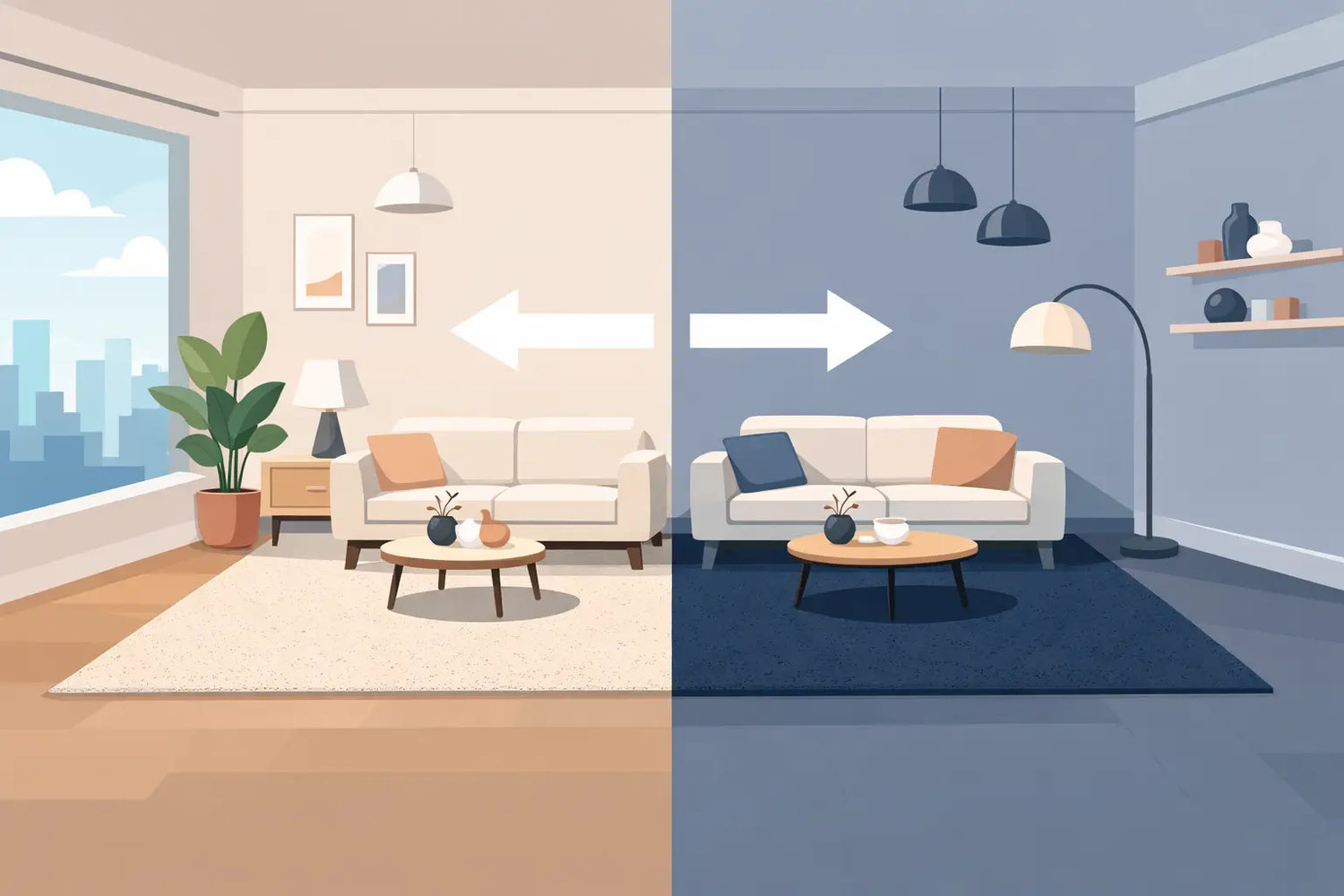
A room can be perfectly furnished yet still feel smaller than necessary. Often, the difference isn’t in the furniture but in what lies beneath. If you wonder which carpet color enlarges space, you’ll quickly think of light shades—but it’s not always that simple. The right color truly works only when it matches the light, the floor, and the room’s function.
Which carpet color enlarges space at home?
In most homes, light colors create the most open feeling. Think of off-white, cream, sand, light beige, greige, and soft gray tones. These colors reflect more light and visually extend the floor, making a space look less heavy and less defined.
You’ll notice this effect especially in smaller living rooms, apartments, and bedrooms where every square meter counts. A dark carpet draws the eye downward and visually compacts the floor area. A light carpet does the opposite: it opens up the room’s base and gives a fresher impression.
However, a room doesn’t have to be completely white to appear larger. In many Belgian interiors, a warm beige carpet often works better than bright white. It adds softness, feels homely, and shows dust or wear less quickly. This is especially interesting for families with children or pets who want to stay practical.
Light shades that almost always work well
Cream and ivory are classics if you want to brighten a room without creating a cold atmosphere. Sand color pairs beautifully with wood, natural furniture, and calm interiors. Light gray is a safe choice in modern homes with black accents, metal details, or cool wall colors.
Greige—a mix of gray and beige—is often the smartest middle ground. It looks spacious but also warm and stylish. Especially if you’re torn between modern and cozy, this is a color that rarely feels too harsh or flat.
Not just the color, contrast matters too
A carpet enlarges a space not only by its own color but also by the contrast with the rest of the interior. A light carpet on a dark floor usually creates a strong spatial effect. The room gets more light at the bottom, and the carpet stands out as an open surface.
If there’s already a pale floor, like light oak, beige tiles, or soft PVC, a carpet in exactly the same tone can sometimes blend in. That doesn’t make the space smaller but doesn’t necessarily make it more interesting either. In that case, a subtle difference often works better—for example, a carpet that’s just a bit warmer or cooler than the floor.
Ton sur ton creates calmness and spaciousness
If you like a calm, elegant atmosphere, it’s best to choose ton sur ton. That means the floor, carpet, and larger furniture are close in color value. A beige floor with a sand-colored carpet and a light sofa often looks more spacious than an interior with many harsh transitions.
This calm look is especially helpful in rooms that already have many stimuli, such as a living room with toys, open shelves, or multiple materials. Fewer visual breaks provide more breathing room.
Which colors actually make a space smaller?
Very dark shades like anthracite, dark brown, deep blue, or black can be beautiful, but they usually don’t enlarge a room. They add atmosphere, depth, and luxury but also visually take up more space. In a large living room, that can feel cozy. In a narrow room or studio, it can feel heavier more quickly.
Very busy patterns with strong color contrasts can also make a space feel more compact. They draw attention to the carpet as an object rather than the space as a whole. That’s not a problem if you want to make a deliberate statement, but it’s less suitable if your primary goal is a larger feeling.
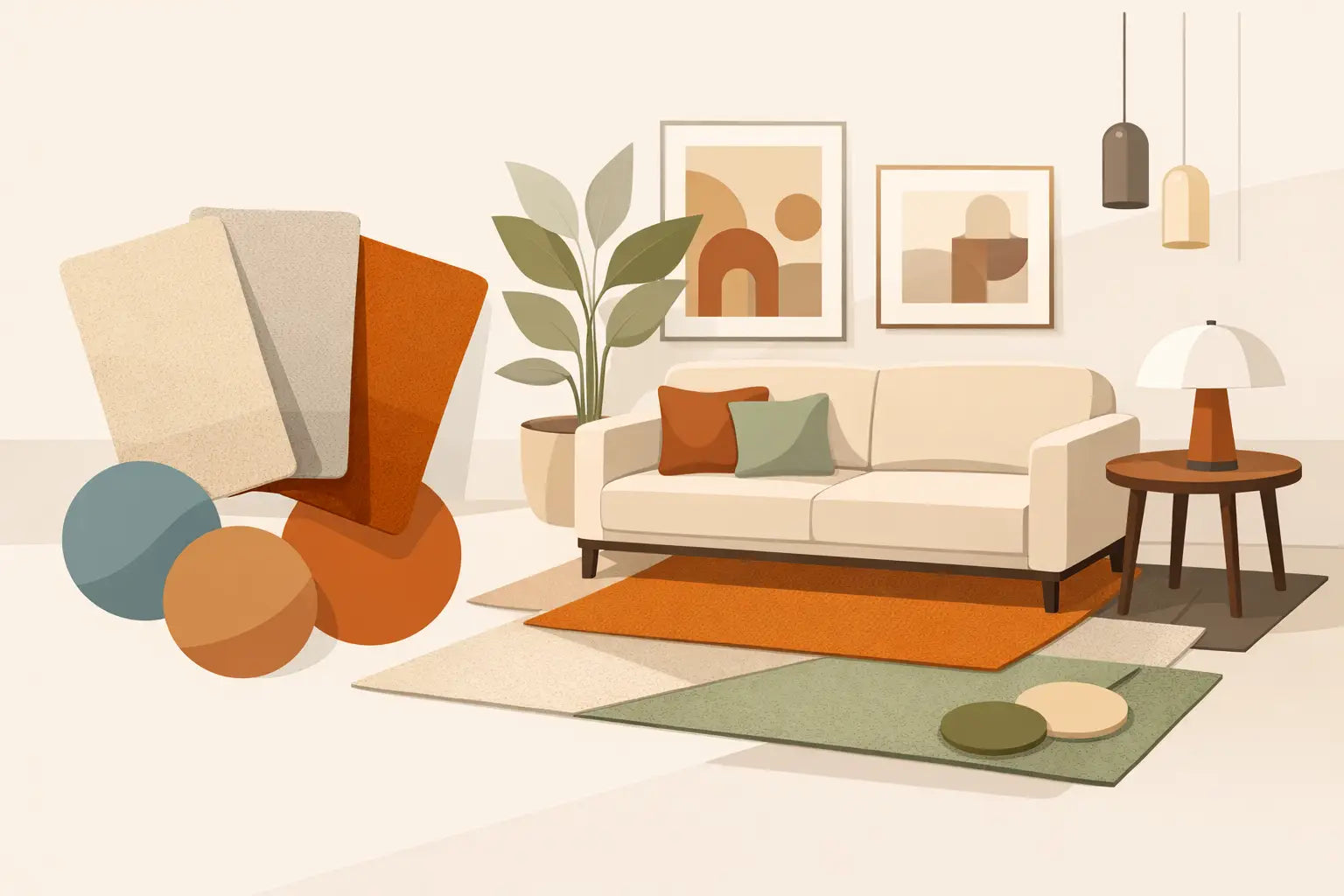
Red tones, dark greens, and warm earth colors have a lot of character but usually work better in larger or well-lit rooms. They provide warmth, not necessarily openness.
The influence of light in the room
The same color can look spacious in one home and dull in another. This all depends on daylight. A north-facing room receives cooler, softer light. There, warm light shades like cream, sand, and warm beige feel more pleasant than cool white or harsh light gray.
A south-facing room often has a lot of sun. You can choose more freely there because the natural light already visually lifts the carpet. Even a slightly deeper greige or taupe can still look spacious there.
In rooms with few windows, it’s smart to choose not only light colors but also softness in texture. A carpet that subtly catches light, for example with a fine sheen or well-maintained pile, can make the space livelier than a matte, heavy texture.
Which carpet suits each room best?
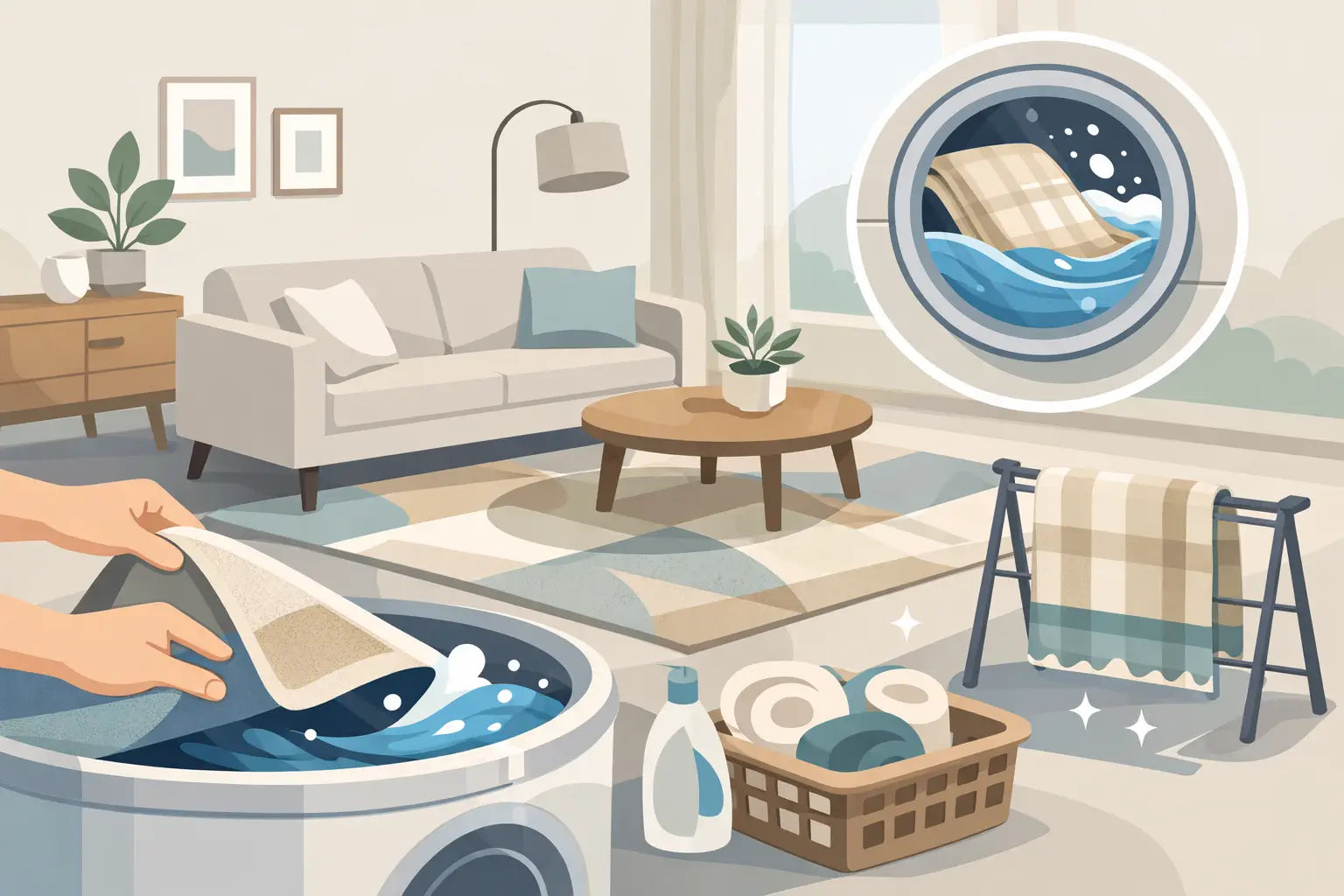
In the living room, many people instinctively choose a medium or dark color out of fear of stains. Understandable, but not always necessary. A washable low-pile carpet in beige, greige, or light gray often offers the best of both worlds: a spacious effect and easy maintenance.
In the bedroom, it can be even softer. Light, powdery shades make the space calmer and larger, fitting well with a place where comfort is central. Think of ivory, light taupe, or a warm nude tone.
For the dining room, nuance is important. Too light can seem more sensitive to daily use, especially with children. A mixed light color often works smartly: spacious but more forgiving. In a child’s room, it can be more playful, although a soft light base usually remains the best choice if the room is compact.
Carpet size and shape also change the sense of space
Even the perfect color won’t help much if the carpet is chosen too small. A small carpet in the middle of the room makes the surrounding floor look fragmented. This actually makes the space seem smaller. A larger carpet provides cohesion and calm.
In the living room, it looks better if at least the front legs of the sofa and armchairs rest on the carpet. In the bedroom, a larger model on both sides of the bed adds softness and more visual width. Color and size always work together.
Shape also plays a role. A rectangular carpet that follows the room’s lines usually enhances the feeling of order and length. A round carpet can soften a corner but doesn’t automatically enlarge the entire space.
Texture and pattern: subtle is stronger
If you want a space to look larger, it’s best to choose a calm surface. A solid carpet or a subtly mixed pattern almost always works better than large ornaments or heavy contrasts. That doesn’t mean character has to disappear. A fine ton sur ton pattern can add extra depth without shrinking the room.
Low-pile carpets often look cleaner and airier than very thick, high-pile models. This makes them interesting for modern interiors or smaller spaces. At the same time, they are often easier to maintain, which is a plus in a busy family home.
If you still want extra warmth, choose softness in material and tone, not necessarily a dark color. This way, you keep an open feeling without sacrificing coziness.
Common mistake: looking only at color
The question of which carpet color enlarges space is valid, but color alone doesn’t decide everything. If the room is full, the curtains are heavy, or the furniture looks too dark and bulky, even the lightest carpet won’t work miracles. A carpet supports the sense of space; it doesn’t replace thoughtful furnishing.
That’s why a light carpet choice works best combined with enough visible floor around, airy furniture, and a color palette that doesn’t clash too much. A harmonious whole always feels more spacious than a room with loose, competing elements.
At Omid Carpets, we also notice that customers are often happiest with a color that not only looks good in photos but also fits their daily life. A spacious interior shouldn’t just look big; it should also feel warm and be easy to maintain.
So what is the smartest choice?
If you want to play it safe, warm beige, sand, cream, and light greige are the strongest choices. They visually open up a room, combine easily with different styles, and remain inviting. Light gray is a good option for a more sleek or modern interior, while ivory can be especially beautiful in calm, elegant spaces with enough light.
Unsure between two shades? Usually choose the lighter one but avoid a color that contrasts too sharply with your floor or furniture. The most beautiful spatial effects occur when a carpet doesn’t scream for attention but gradually makes the room feel larger, lighter, and calmer.
A well-chosen carpet doesn’t change dimensions on paper but changes how your home is experienced. And that feels a little more spacious, softer, and pleasant every day.

Leave a comment
This site is protected by hCaptcha and the hCaptcha Privacy Policy and Terms of Service apply.