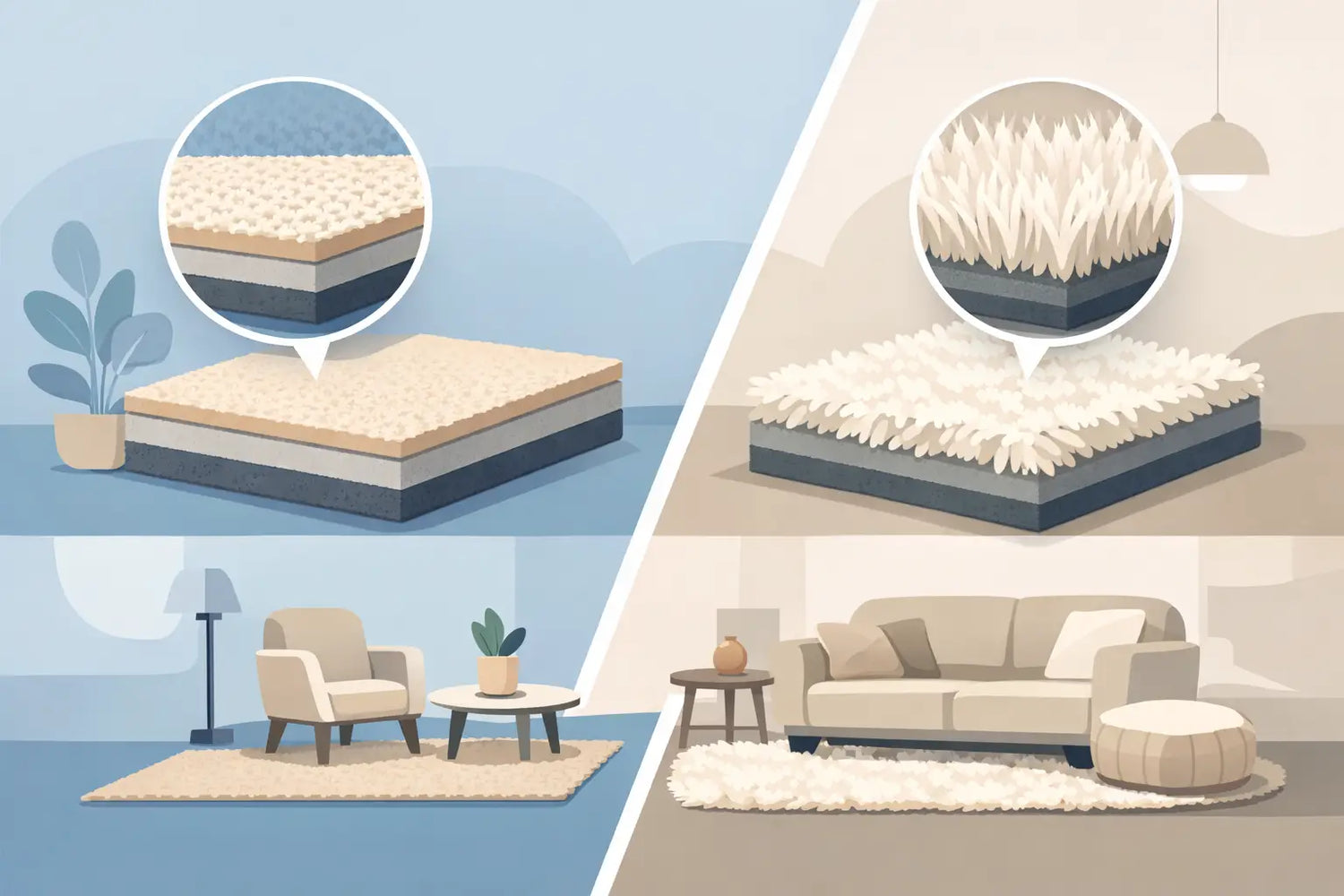
A carpet can make or break a room. Not just in terms of color or pattern, but especially in how it feels in everyday life. When choosing between low-pile and high-pile carpet, it’s not just about taste. It’s also about comfort under your feet, how often you vacuum, whether children run around, and whether you prefer a calm, sleek look or a soft, full appearance.
When you choose a carpet, you’re essentially buying a piece of living comfort. That’s why it’s worth taking a moment to consider the pile height. It sounds technical, but you can feel the difference immediately. And once you know what works in your living room, bedroom, or dining area, choosing becomes much easier.
Low-pile versus high-pile carpet: what’s the difference?
The difference lies in the length of the fibers. A low-pile carpet has short, compact fibers. This makes it look flatter, neater, and often more modern. A high-pile carpet has longer, looser fibers and feels softer and fuller. It’s the type of carpet your feet sink into a little.
This difference affects much more than just appearance. A low-pile model is usually easier to maintain, tends to slip less, and is practical in high-traffic areas. A high-pile carpet, on the other hand, adds extra warmth, a luxurious feel, and more softness to rooms where comfort is a priority.
So, there’s no absolute winner. The best choice depends on your lifestyle.
When low-pile carpet is the smartest choice
In many Belgian homes, low-pile carpet is simply the most practical answer. Especially in a living room that’s lived in, a dining room with sliding chairs, or a hallway where dirt is tracked in more quickly. Short fibers trap less dust and crumbs and are generally easier to vacuum.
Those with children will quickly notice the advantage. Toys get caught less often, spilled glasses are easier to clean up, and the carpet tends to look neat for longer. The same advantage applies in homes with pets. Hair doesn’t get as deeply embedded in the pile as with a shaggy or other high-pile model.
In terms of appearance, low-pile carpet fits nicely in modern, Scandinavian, and minimalist interiors. It looks calm and tidy. Especially in neutral shades like beige, taupe, gray, or sand, it adds warmth without making the space feel heavy.
An extra plus is that many low-pile options today are very easy to maintain. Think washable carpets, models with anti-slip backing, or practical qualities suitable for heavily used spaces. For those who want to combine comfort with convenience, this often offers the best balance.
The best rooms for low-pile carpet
Low-pile carpet works best where ease of use matters. The dining room is a good example. Chairs slide more easily over a flat carpet, and crumbs are easier to remove. It also works excellently in the living room, especially if the carpet lies under a coffee table or seating area and is used intensively.
In an office or hobby room, low-pile is often more practical because office chairs or other furniture stand more stably. And in a child’s room, it can be a smart choice if you want softness but don’t want a lot of maintenance.
When high-pile carpet brings more atmosphere and comfort
Some rooms simply call for softness. A high-pile carpet immediately gives a warmer, fuller look to a space. It invites you to take off your shoes, sit down for a moment, or just enjoy that soft feeling under your feet. Especially in a bedroom or a quiet seating area, it really makes a difference.
High-pile carpets are often chosen for their cozy character. They dampen sound, feel comfortable, and make an interior less harsh. In rooms with many clean lines, smooth floors, or simple furniture, such a carpet can be the element that makes everything feel more homely.
That doesn’t mean high-pile is always the best choice. It requires more maintenance and is less practical in rooms where eating, playing, or heavy foot traffic is common. But if your priority is comfort and atmosphere, a high-pile carpet often provides that extra touch of luxury.
The best rooms for high-pile carpet
The bedroom is probably the most logical place. Stepping out of bed onto a soft carpet simply feels nicer than onto a cold floor. It also works well in a reading nook, dressing room, or a less frequently used living room.
It can also work in a family lounge, but it’s wise to think carefully about placement. Under a coffee table or in a corner where relaxation is the focus, it stays beautiful and comfortable. Under a dining table, it’s usually less practical.
Maintenance often makes the real difference
Many people choose first with their eyes, and only then with their head. Understandable, but with carpet, maintenance is really a decisive factor. A high-pile carpet can look stunning in the store or in photos, but if you don’t have much time for upkeep, your love for it can fade quickly.
Low-pile carpets are usually easier to vacuum. Dirt stays closer to the surface, and you can see more quickly what needs to be done. With high-pile carpets, dust, hair, and small particles creep deeper between the fibers. That requires more regular care and sometimes more patience.
If you have young children, pets, or a busy household, low-pile is often the safest choice. If you live more quietly, love a luxurious feel, and don’t mind extra maintenance, high-pile can be a wonderful addition.
What feels better?
That depends on what you consider comfort. Those who want a carpet that looks soft but feels firm often prefer low-pile. Those who dream of a fuller, cozy texture to really sink into will tend to choose high-pile.
There’s also a seasonal feeling involved. High-pile feels extra cozy in autumn and winter. Low-pile looks lighter and fresher, which many people find pleasant in brighter interiors or rooms with underfloor heating.
Again, it’s not a matter of better or worse, but what fits your living rhythm.
Low-pile versus high-pile carpet in your interior style
Interior and carpet should complement each other. In a modern interior with sleek furniture, metal accents, or a calm color base, low-pile often fits better. It adds warmth without weighing down the lines in the space.
In a more classic, hotel-chic, or romantic interior, high-pile can add extra depth. It softens a seating area and gives bedrooms a luxurious touch. It can also work well in a boho interior, as long as the rest of the space remains calm enough.
Unsure between the two? Don’t just look at your furniture style, but also at how you live. A beautiful interior shouldn’t just look good on day one, but also stay practical by month six.
How to make the right choice without regret
If you want to decide quickly, ask yourself three simple questions. Where will the carpet be placed? Who uses that space every day? And how much maintenance are you realistically willing to do?
For heavily used spaces, low-pile is usually the smartest investment. For comfort zones where softness is key, high-pile should definitely be considered. And if you want the best of both worlds, you can even choose differently per room. A flat, easy-care carpet in the living room and a softer model in the bedroom is the ideal combination for many families.
At Omid Carpets, we notice that customers often start with one preference but ultimately choose based on their lifestyle. That’s also the smartest approach. You don’t buy a carpet just to look at it, but to live on it every day.
Price, durability, and everyday convenience
Price depends not only on pile height but also on material, finish, and quality. Still, practical low-pile carpets are often very attractive for those seeking good value for money, especially when ease of maintenance and long-term use are important.
High-pile carpets may show signs of wear more quickly in high-traffic areas. That’s not necessarily a problem in the right space, but it’s good to keep in mind. If you want to enjoy a carpet that keeps its shape and look for a long time, you need to look beyond softness alone.
The best purchase is usually not the carpet that impresses most at first glance, but the one that still feels good in your daily routine after a year.
A warm home doesn’t start with the biggest furniture, but often with what you feel under your feet. So choose not only what looks good, but especially what fits how you live—then your carpet won’t be a detail, but a natural part of your home.


Leave a comment
This site is protected by hCaptcha and the hCaptcha Privacy Policy and Terms of Service apply.