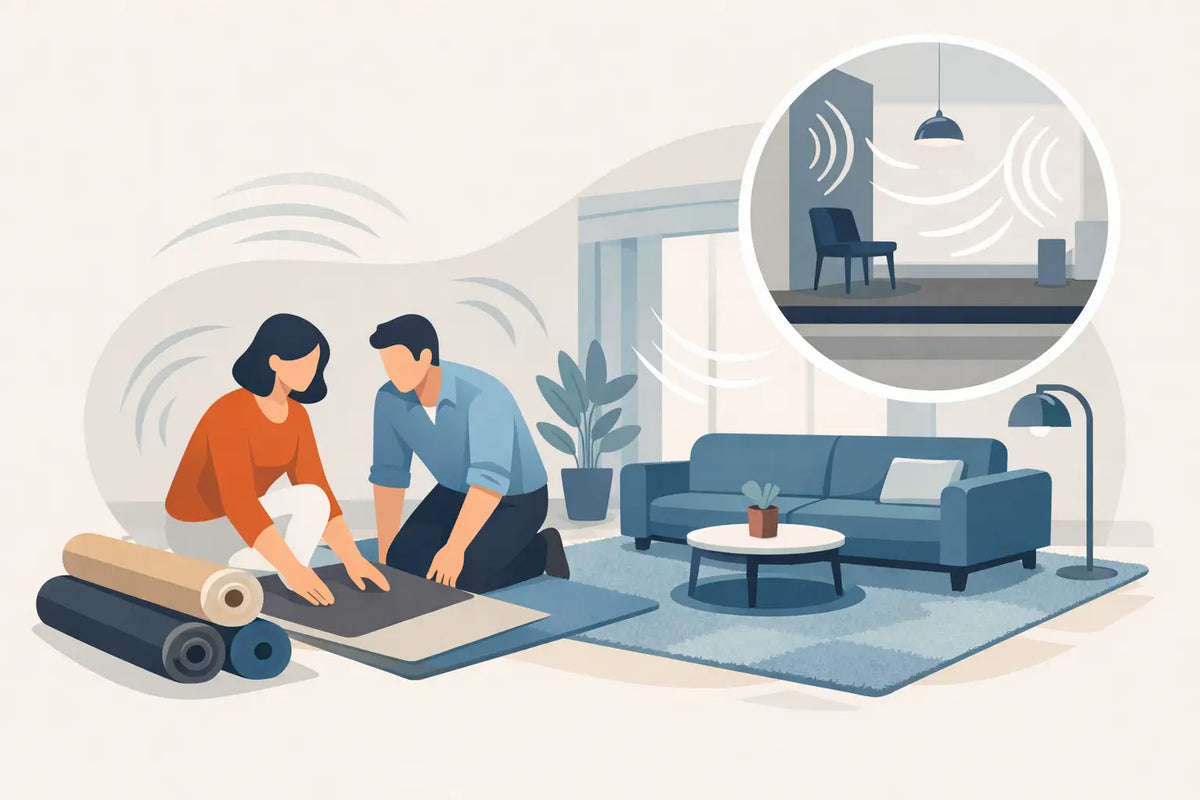
A conversation that seems to bounce off the walls, footsteps that sound loud, and a television whose sound fills the entire room: echo quickly makes an apartment feel less cozy. Those who choose a carpet for an apartment with echo often notice an immediate difference. Not because a rug eliminates all sounds, but because it softens hard floor surfaces and makes the space audibly warmer.
In apartments with parquet, tiles, concrete-look floors, or vinyl, materials that absorb sound are often lacking. A beautiful carpet then brings more than just color and atmosphere. It dampens reflections, makes the seating area more intimate, and gives your interior that calm, cozy feeling you long for after a busy day.
Why does an apartment echo so easily?
Echo occurs when sound waves keep reflecting off hard, flat surfaces. Think of a glass sliding door, plastered walls, a stone floor, or a large dining table. The fewer soft materials present in the space, the longer the sound lingers.
A carpet absorbs part of that reflection. This is especially noticeable in an open living room where the kitchen, dining area, and seating area flow into each other. Voices sound less sharp, dishes make less noise, and the space feels calmer without having to heavily furnish your interior.
Do not expect complete soundproofing. A rug mainly helps against echo and impact noise in your own home, such as footsteps, sliding chairs, or toys. If you clearly hear noise from neighbors through the ceiling or walls, the building’s construction, subfloor, and insulation also play a role. Still, a well-chosen carpet is one of the simplest and most beautiful first steps.
Choosing a carpet for an apartment with echo: what to consider
Not every carpet has the same effect on acoustics. The combination of size, pile, material, and placement determines how much calm you create in the room. A small decorative rug under the coffee table can be beautiful but will make less difference in a large, bare living room than a generous rug that truly anchors the seating area.
Choose a size that breaks up the hard floor
For sound comfort, the rule is usually: the more floor surface the carpet covers, the better. That doesn’t mean your entire floor needs to be covered. It does mean the rug should be large enough to form a clear zone.
In the living room, ideally choose a size on which at least the front legs of the sofa and armchairs rest. This creates one cohesive, soft island zone instead of a loose rug in the middle. In a spacious seating area, a size of 200 x 300 cm or larger often works better than 160 x 230 cm. Measure your furniture layout beforehand and leave enough floor visible around the rug so the room still looks spacious.
Under the dining table, the carpet should extend about 60 cm beyond the tabletop on each side. This way, chairs remain on the rug even when pulled back. This not only prevents sliding on a hard floor but also makes a world of difference during long dinners with family or friends.
Go for density and comfort, not just thickness
A high-pile carpet feels wonderfully soft and can nicely dampen sound, but thickness alone is no guarantee. A densely woven low-pile rug can also perform strongly, especially if it has a sturdy backing. The advantage? Low-pile models are often easier to vacuum, more stable for furniture, and more practical in a busy household.
For a living room with noticeable echo, a medium-thick or full pile is usually a good middle ground. It provides enough absorption and comfort without making maintenance difficult. In a modern home with many clean lines, a soft low-pile carpet with a full texture can add exactly the warmth that’s missing.
High-pile fits beautifully in a bedroom or a quiet reading corner. There it can feel extra soft and luxurious. Under a dining table, a low-pile, flat-woven or short-sheared carpet is usually wiser. Crumbs, chair legs, and daily use call for convenience there.
Pay attention to material and backing
Wool is naturally resilient, warm, and strong in sound absorption. It’s a beautiful choice for those seeking a quality carpet with a rich appearance. At the same time, wool requires a bit more care and is generally more expensive.
Synthetic materials like polypropylene and polyester are especially interesting for families, rental apartments, and heavily used spaces. They are often softer than expected, colorfast, and easy to maintain. Many modern rugs combine a pleasant feel underfoot with an accessible price, allowing you to choose a larger size without straining your budget.
Also look at the backing. A non-slip backing keeps the carpet better in place, which is extra safe on smooth floors and handy in an apartment where children play or there is frequent foot traffic. For some floor types, a separate anti-slip underlay can provide even more stability and a slight extra dampening effect. Always check if the underlay is suitable for your floor, especially with underfloor heating or sensitive parquet floors.
The best place for an acoustic rug
Start in the space where you experience the most echo. This is usually the living room, but a long hallway, an office, or an open dining room can benefit just as much from textile underfoot.
In the seating area, a large rug works as a soft base for the sofa, coffee table, and side furniture. Add curtains, cushions, and possibly a fabric armchair if the space still sounds very hollow. The carpet then becomes the starting point of an interior where materials reinforce each other.
In the dining room, it’s best to choose a flat rug that fits well under the table and chairs. A kilim or a low-pile modern rug is often a smart choice here: stylish, practical, and easier to keep clean. Do you have young children? Then choose a washable model or a mixed pattern where small stains are less noticeable.
The bedroom also deserves attention. A carpet that extends on both sides of the bed not only softens the acoustics but makes cold mornings more pleasant. In a compact apartment, one carefully chosen rug can even combine several functions: it defines a corner, softens sound, and gives the space more personality.
Which style suits a calm space?
Those who want to reduce echo don’t automatically have to choose a heavy, dark carpet. Light shades like sand, cream, greige, and soft gray keep an apartment airy, while the texture provides warmth. A subtle relief or a mixed fiber adds depth without visual clutter.
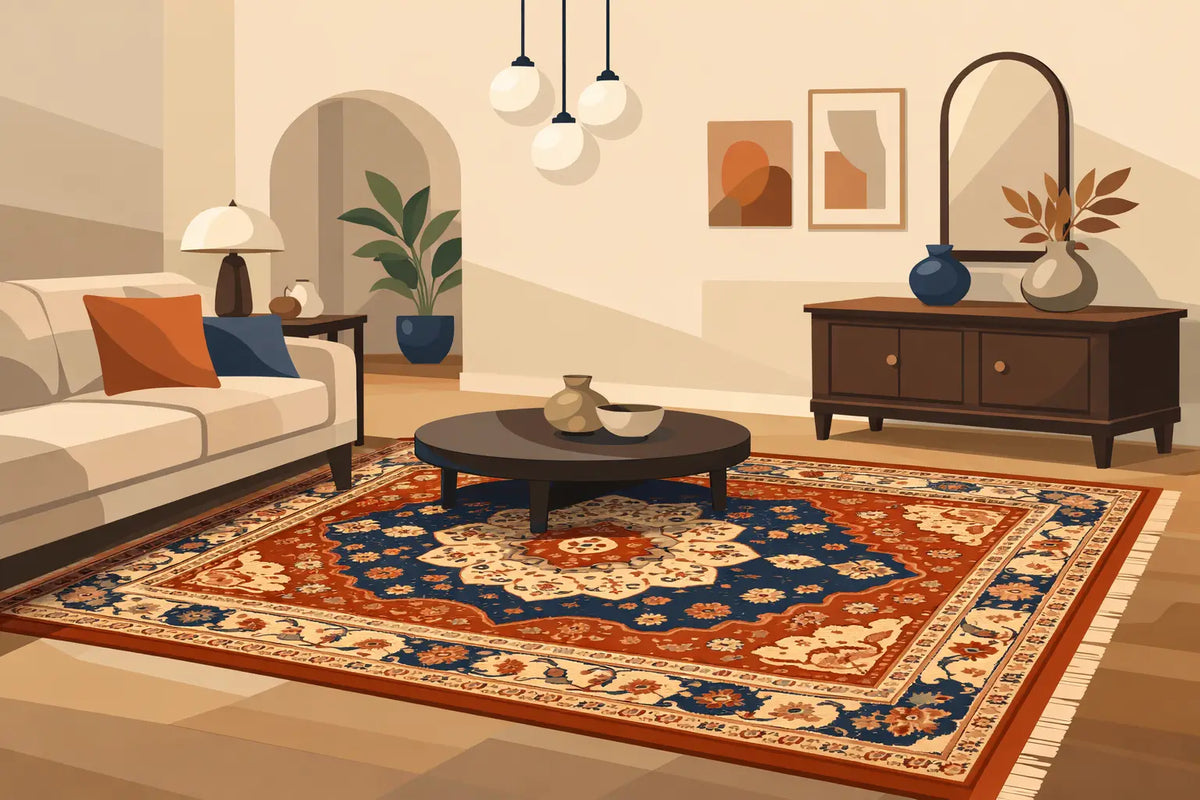
In a modern interior with white, black, and metal, a beige or taupe-colored rug can soften harsh contrasts. In a classic interior, a detailed pattern or warm red and blue tones bring character. A kilim adds a handcrafted, lively touch without making the room feel overwhelming.
A busy pattern is often practical in a living space: it hides small stains and daily wear better than a plain, very light carpet. In a small room, a calm design can actually create more space. It depends on how intensively you use the room and what feeling you want to evoke.
Practical comfort for apartment living
A carpet that softens sound must also fit your daily life. Do you live with children, pets, or heavy foot traffic? Then ease of maintenance is at least as important as appearance. Choose a material that tolerates regular vacuuming well and treat stains immediately with a slightly damp cloth according to the care instructions.
Washable low-pile carpets are especially handy for a family or a rental home. You keep the warm effect of textile without worrying about every little accident. In a quiet bedroom, you can safely choose a more luxurious, softer pile that focuses mainly on comfort and atmosphere.
At Omid Carpets, you’ll find both modern, low-maintenance rugs and characterful kilims and classic carpets. This way, you can choose based on what your apartment needs: a large soft anchor point in the living room, a practical rug under the dining table, or a warm landing next to the bed.
Take your time to measure your space and think about how you really live there. A carpet that fits beautifully with your furniture, walking paths, and daily habits does more than reduce echo: it makes an apartment a place where every conversation, every step, and every quiet moment feels more pleasant.


Leave a comment
This site is protected by hCaptcha and the hCaptcha Privacy Policy and Terms of Service apply.