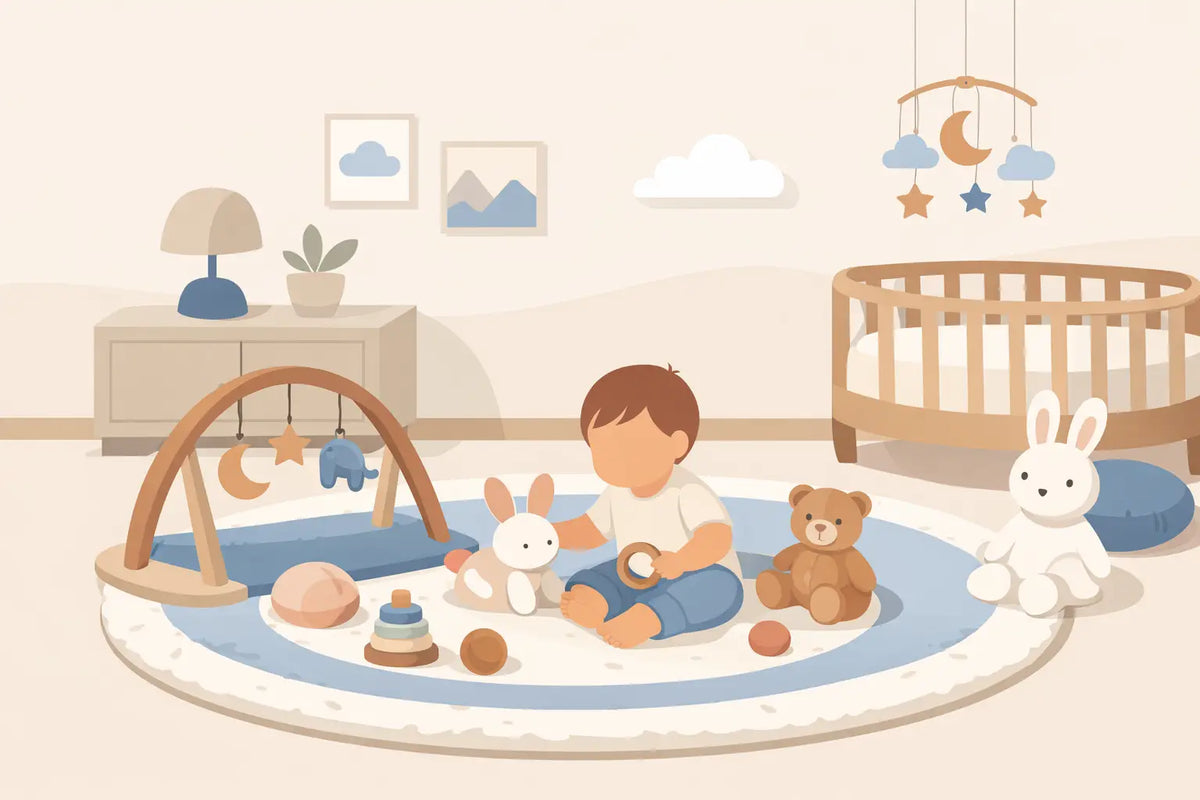
In the first few months, your baby may mostly play on your lap or in the playpen. However, the floor quickly becomes a regular spot for tummy time, rolling, crawling, and the first play moments. A soft play mat for the nursery makes that space warmer, more comfortable, and more attractive. It cushions a cold tile floor, provides little hands with a comfortable surface, and immediately brings calm to the room.
But softness alone is not enough. A play mat in the nursery should also fit your space, daily routine, and lifestyle. Do you have pets, older children, or little time for maintenance? Then material, pile height, and good grip make a big difference.
Why a play mat is much more than just decoration
A nursery can be serene without feeling bare. A rug connects the crib, changing table, and the chair where you feed into one warm whole. Especially in rooms with hard floors, it creates a softer look and a more pleasant acoustics. Less echo often means a calmer feeling during naps, storytime, and late-night feedings.
For your baby, the practical benefits are just as great. On a soft mat, your little one lies more comfortably during tummy time, and the transition from playing to resting is more pleasant. Once crawling begins, a mat also offers a friendlier surface than parquet, laminate, or tiles.
However, don’t expect it to be a miracle cure for every fall. A play mat softens minor bumps but does not replace supervision. Also, make sure the edges lie flat and that the mat cannot slip as your baby becomes more mobile.
Choose the right size for the nursery
The size determines whether a rug makes the room feel more spacious or takes up too much floor space. In a compact nursery, a medium-sized mat often works best. For example, place it partially under the changing table or centrally in the free play area. This keeps the room airy while providing enough soft space to play.
In a larger room, the mat can be more prominent. A spacious model under or next to the crib gives the room a neat, cozy character. Just keep enough distance from doors, cabinet doors, and drawers. A mat that curls up every time you open a drawer is not practical and quickly looks untidy.
Measure the free floor area before choosing. Consider not only how the room looks now but also the coming years. A baby becomes a toddler who builds blocks, reads books, and likes to sit on the floor. A slightly larger size can be a smart choice if the room needs to grow along.
A simple placement that always works
Place the play mat where daily life happens: next to the changing table, in front of a comfortable chair, or in the open space between the crib and the wardrobe. Avoid a position that is completely hidden under furniture. You buy the mat for comfort and atmosphere, so leave enough of the pattern and soft texture visible.
Which material feels best?
For a nursery, soft, low-maintenance materials are usually the best choice. A low-pile rug feels pleasant but stays cleaner more easily than a high-pile model. Crumbs, dust, and lint don’t get stuck as deeply, which is handy when your baby later brings snacks and toys to the play area.
Synthetic fibers like polypropylene are popular in children’s rooms because they are soft, colorfast, and user-friendly. Stains can usually be treated more easily than with delicate natural fibers. Many modern models are also lightweight, so you can easily move or shake them out.
A high-pile rug feels wonderfully luxurious and is especially cozy for a seating corner. For intensive play, low or medium pile is often more practical. Toys with small wheels roll better over it, and you can keep the surface fresher more easily. So it depends on what you value most: an extra cuddly feel or maximum ease of maintenance.
Also pay attention to the backing. A non-slip underside is a valuable choice on smooth floors, especially when older siblings also play in the room. If your favorite rug doesn’t have a non-slip layer, use a separate non-slip underlay that fits completely under the carpet.
A soft play mat for the nursery that matches your style
Nursery decoration doesn’t have to consist only of pastel pink, light blue, or busy patterns. Sand, cream, beige, soft green, and warm terracotta bring calm and combine beautifully with wooden furniture. They also remain stylish when the room later changes into a toddler’s or child’s room.
A subtle pattern also has a practical advantage: small stains or lint are less noticeable than on a completely plain, very light mat. Think of fine dots, soft arches, stars, or a calm geometric design. Want a playful touch without making the room feel busy? Then choose one clear accent, for example a cloud shape, an animal motif, or a round shape, and keep the rest of the decor calm.
Round rugs are especially beautiful in a nursery. They soften the many straight lines of a wardrobe, changing table, and crib. A rectangular model is ideal for defining a larger play area. Both can work well—the shape should mainly fit the available space and the furniture already in place.
Maintenance that fits real family life
A nursery won’t always stay spotless. Milk stains, spit-ups, baby food, markers, and small muddy shoes are part of life sooner or later. So choose not only with your eyes but also with maintenance in mind. A washable low-pile mat is a reassuring option for many families. You don’t have to stress over every little accident and can keep the room fresher more easily.
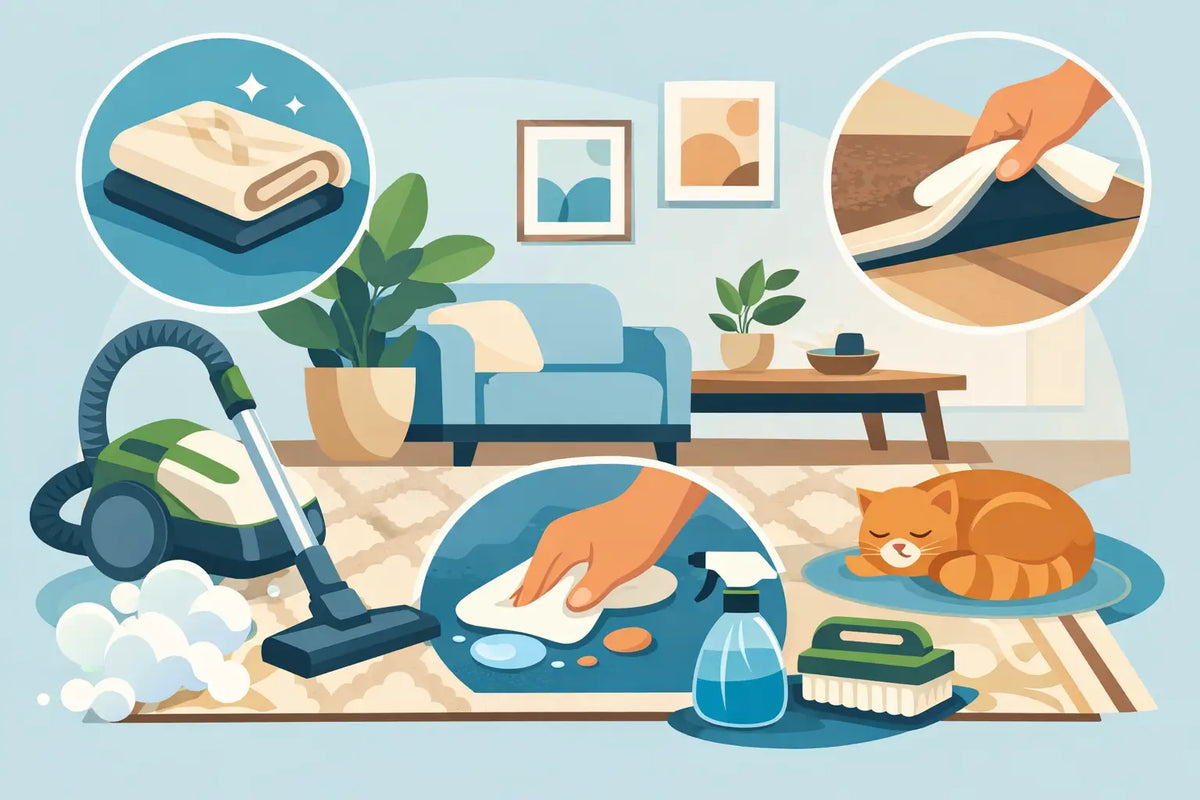
Vacuum regularly on a gentle setting and treat stains as soon as possible. First, gently blot with a clean, slightly damp cloth instead of rubbing hard. Too much water can spread a stain or keep the backing damp for a long time. Always let the mat dry thoroughly after cleaning before your baby plays on it again.
Also check the edges and underside occasionally. Especially after moving furniture or a thorough cleaning, a mat can shift. A flat-lying play mat not only looks better but is also safer for little crawlers and for parents entering the room with arms full of laundry.
Choose comfort without compromising quality
An affordable play mat doesn’t have to be a temporary solution. Look for a model that withstands daily use, is easy to maintain, and whose color will still suit your interior for years. This way, it becomes a familiar place for the first belly laughs, towers of wooden blocks, and quiet story moments.
At Omid Carpets, you’ll find soft, practical rugs that add warmth to a nursery without complicating family life. Above all, choose a mat you enjoy sitting on next to your little one. That is ultimately the best test: a beautiful room is nice, but a room where you can comfortably grow together is even more valuable.

Leave a comment
This site is protected by hCaptcha and the hCaptcha Privacy Policy and Terms of Service apply.