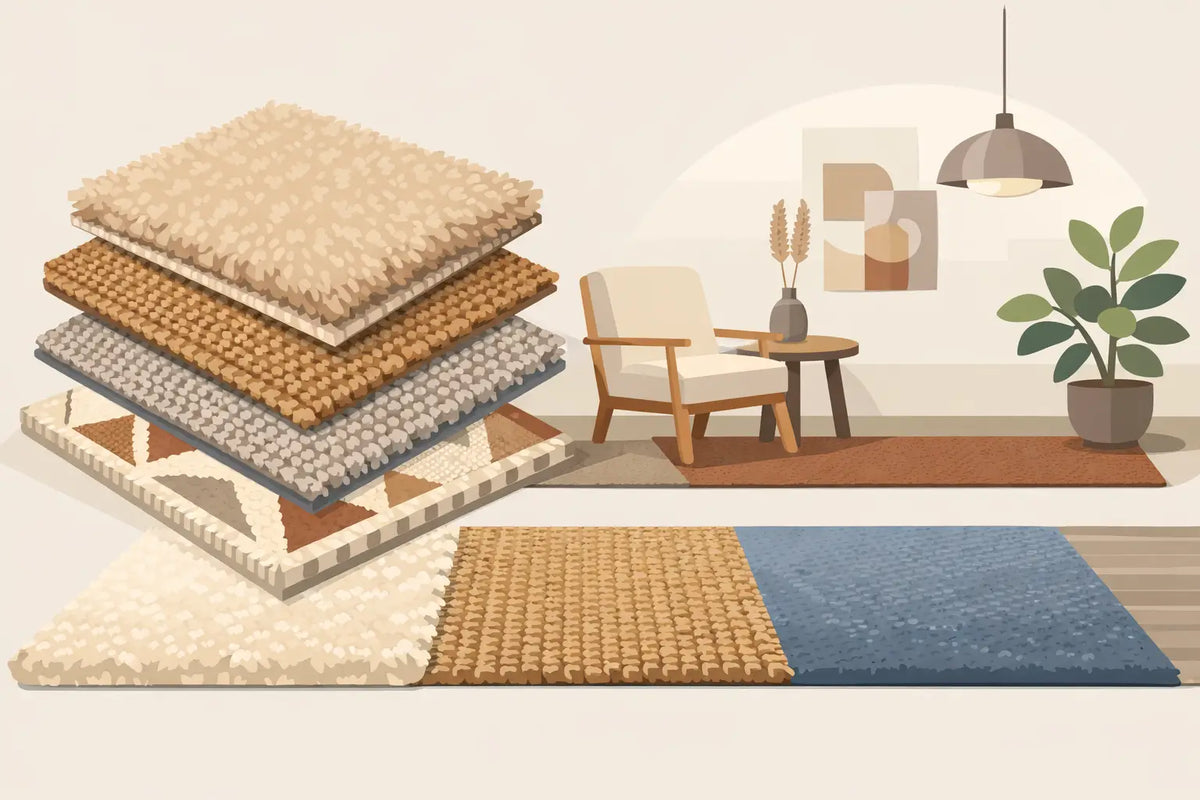
A rug can instantly make a room warmer, quieter, and cozier. But if you only look at color and size, you miss an important difference: the material determines how soft your carpet feels, how long it stays beautiful, and how much maintenance it requires. With this guide to carpet materials, you choose not only with your eyes but also with your family's daily life in mind.
Why the material of your carpet matters so much
A carpet endures a lot. Think of playing children, sliding chairs, shoes in the hallway, a pet in its favorite spot, or a glass that tips over during a cozy evening. The right material makes the difference between a beautiful purchase for a short time and a rug you enjoy for years.
There is no material that is the best choice for every room. A soft, high-pile carpet feels wonderful next to the bed but is less practical under a dining table. A strong synthetic rug fits perfectly in a busy family, while wool comes into its own beautifully in a living room where comfort and a natural look are paramount. Always consider the location, use, and atmosphere you want to create.
Guide to carpet materials: the most popular choices
Wool: naturally warm and stylish
Wool is a beloved carpet material for those who appreciate a rich, timeless look. The fiber naturally feels warm and resilient. As a result, a wool carpet often bounces back nicely after footsteps or furniture, making it especially suitable for the living room and bedroom.
Wool can also absorb moisture without feeling damp immediately and naturally repels dirt. You can usually vacuum up crumbs or loose hairs easily. The price is often higher than synthetic alternatives, and wool requires careful treatment with stains. Still, it is a strong choice for those who consciously invest in comfort, quality, and an interior with character.
In a hand-knotted carpet or a classic rug, wool also enhances the authentic look. The fiber gives color depth and makes every pattern lively without being garish.
Cotton: light, fresh, and often washable
Cotton rugs feel soft and airy. They are usually lighter than wool models and fit nicely in a relaxed, natural living style. Think of a fresh rug in the bedroom, a playful rug in the children's room, or a subtle runner in the kitchen.
A big advantage is that smaller cotton rugs are sometimes washable. Always check the care label: thickness, finish, and any non-slip backing determine whether a model can go in the washing machine. Cotton can wear out faster in high-traffic areas and is more sensitive to stubborn stains than, for example, polypropylene. Therefore, it is mainly a nice choice for spaces where atmosphere and softness are important but where there is less intensive foot traffic.
Polypropylene: practical for a lively household
Polypropylene is one of the most chosen synthetic materials for modern rugs. Not without reason: it is strong, colorfast, reasonably priced, and easy to maintain. Stains generally penetrate the fiber less quickly, making this material excellent for families with children, pets, or a busy living room.
Polypropylene is also often a smart choice for a dining room. Chairs can slide over it smoothly, and spilled drinks are usually easy to clean with a damp cloth and mild detergent. Preferably choose a low-pile model if you have a dining table. It looks neat and prevents crumbs from sinking deep between the fibers.
Polypropylene feels less natural than wool, but today's qualities are surprisingly soft. Those who want a low-maintenance carpet with a good price-quality ratio often find exactly what they need here.
Polyester: soft and color-intense
Polyester is known for its soft touch and bright colors. The material is perfect for rugs with a modern design, a subtle sheen, or a high-pile finish. In a bedroom or seating area, polyester quickly gives that pleasant feeling of bare feet on a soft surface.
The material resists fading well and can be a strong choice if you want a striking color or pattern. Keep in mind the location: in a very busy passage, polyester can look more flattened than wool or polypropylene. Regular vacuuming and occasionally rotating the rug help distribute wear evenly.
Viscose: luxurious look with extra care
Viscose has a beautiful, silky sheen and immediately gives an interior a refined appearance. Especially in elegant living rooms, calm bedrooms, or spaces where the rug may be a decorative eye-catcher, this material stands out beautifully.
That beauty requires some gentleness in use. Viscose is more sensitive to moisture, stains, and heavy wear. Therefore, it is better not to place it in the hallway, under a dining table, or in a playroom. Those willing to handle it carefully get a particularly stylish carpet that captures light and color beautifully.
Jute and sisal: character from nature
Natural fibers like jute and sisal bring texture into the home. They fit well with a rustic, bohemian, or Scandinavian interior and combine nicely with wood, linen, and soft upholstery fabrics. Their sturdy, woven look immediately livens up a space.
Jute generally feels softer than sisal, while sisal is stronger and somewhat rougher. Both materials are less suitable for damp rooms and can be sensitive to stains. It is better to place them in a dry living room, office, or bedroom than in the kitchen or bathroom. For those seeking a natural base with visible fiber structure, they are an atmospheric choice.
Low-pile or high-pile: just as important
Besides the material, pile height plays a major role. Low-pile rugs have short, dense fibers. They are practical, easy to vacuum, and ideal under a dining table, in a hallway, or in a home with a lot of activity. A low-pile, washable rug with a non-slip backing also offers extra convenience on slippery floors.
High-pile models have longer fibers and feel fuller and softer. They create a luxurious, inviting effect in the seating area or next to the bed. On the other hand, they require a bit more maintenance and are less practical for chairs with wheels or a dining area. If you mainly want comfort, high-pile is a wonderful choice. If you prioritize ease of use, low-pile usually wins.
Choose per room, not just per style
In the living room, a rug may add warmth, but it must also withstand daily use. Wool, polypropylene, and polyester are popular options here, depending on your budget and preference for natural or low-maintenance materials.
For the dining room, a low-pile polypropylene rug is often the most reassuring. Under the dining table, you don’t want fibers that trap crumbs, and stains should be easy to treat quickly. Also, make sure the rug is large enough so all chair legs remain on it when you pull the chairs back.
In the bedroom, softness can be central. A high-pile polyester rug, a wool rug, or a cotton model gives the morning a softer start. For a child's room, washable and durable synthetic materials are especially practical. Preferably choose one with a non-slip backing or a separate non-slip mat so the rug stays firmly in place.
How to keep your rug looking beautiful longer
Good maintenance starts with small habits. Vacuum regularly, but use a gentle setting for delicate materials like viscose. Rotate your rug half a turn every six months if it gets a lot of sun or foot traffic. This prevents color differences and localized wear.
Always gently blot a fresh stain instead of rubbing. Start with a clean, slightly damp cloth and use only a product suitable for the material. Extra caution is important with wool, viscose, and hand-knotted rugs. Test a cleaner first on an inconspicuous corner or ask for advice if in doubt.
A beautiful rug doesn’t have to be fragile or impractical. It’s about the right match: a material that fits your room, your family, and your lifestyle. At Omid Carpets, we are happy to help you make that choice with confidence, so your new rug not only looks stunning but also feels pleasant every day.



Leave a comment
This site is protected by hCaptcha and the hCaptcha Privacy Policy and Terms of Service apply.